







The Historic Boo Orleans Collection
Celebrate Halloween with a bagful of frightful finds from the archive.
By Molly Cleaver, managing editor, and Kelton Sears, editor
October 27, 2026
By Molly Cleaver, managing editor, and Kelton Sears, editor
On a moonlit October night, catalogers at the Williams Research Center heard a faint rattling from the vaults. The uncanny sound swelled as Hollinger boxes shuddered and shelving ranges shook. Then, as if guided by the spectral hand of some otherworldly curator, a stream of glowing Halloween-themed items from the Collection erupted from storage, drifted through the air, and settled into an occult arrangement on the reading room tables. We’ve called in the French Quarter’s leading ghost tour guides to get to the bottom of this, but in the meantime, we hereby present the items from that night’s eerie exhibition in hopes of appeasing the ghostly Gulf Coast stewards whose spirits haunt our halls.
New Orleans Horror Movie Posters
New Orleans is frequently ranked among the spookiest cities in the country, and the murderer’s row of locally produced horror movie posters in our holdings is a testament to that legacy. Among the oldest in the Collection is 1944’s Cry of the Werewolf, about a werewolf princess who murders the curator of an occult museum in New Orleans. Produced by Mardi Gras Productions, The Dead One (1961) made history as one of the first full-color zombie films. Twenty years later, werecats roamed the city (and the Audubon Zoo) in the cult favorite Cat People (1982), featuring a scintillating title theme by David Bowie. The 1994 film adaptation of Anne Rice’s New Orleans horror classic, Interview with the Vampire, disturbed Oprah Winfrey so much, she walked out of an advance screening and nearly refused to interview Tom Cruise about it.


Creepy Carnival
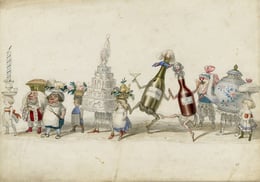
For most of the country, Halloween is the main event when it comes to costuming. In New Orleans, Carnival takes center stage. Even though Mardi Gras puts more emphasis on revelry than devilry, Halloween’s influence has always bled into the festivities. In lieu of the usual jester hats, Venetian masks, and feather headdresses, Carnivalgoers of yore have chosen to hit the streets dressed as vampires, executioners, and even pumpkins. In 1891, Comus chose “Demonology” as their parade theme, and in the 135 years since then, krewes have designed floats with similarly spooktacular themes based on werewolves, witches, and skeletons. Scary outfits for parades and balls were made to match, with many crafted by 50-year Carnival costume design veteran Larry Youngblood. It’s enough to make you scream, “Throw me something, monster!”


Phantasmagoric Photos
It didn’t take long after the invention of photography for practitioners of the new medium to start freaking people out. The concurrent rise of Spiritualism in the mid-19th century guaranteed a ready audience for the photographic apparitions that began to appear. Behind the lens, photographers were using double exposure and practical effects such as “ectoplasm” made from cheesecloth to shock and amaze viewers. In the 20th century, photographers like Eugene Delcroix and Clarence John Laughlin used the trademarks of occult photography to heighten add ghostly effects to their work. Both used south Louisiana’s natural environment to create a sense of otherworldliness, with Laughlin especially fascinated by the architectural and spiritual ghosts of the plantation South. Laughlin’s fanciful titles—Ghosts Along the Mississippi, Haunter of Ruins—heightened the Southern Gothic mystique of his work, which helped to build a supernatural visual vocabulary of Louisiana still seen today, as in HBO’s True Detective.
Laughlin’s Ghosts


Delcroix’s Witches


Related Stories

Four Real New Orleans Legends that Put Ghost Stories to Shame
New Orleans has its fair share of myths and ghost stories, but the truth is always stranger than fiction.

Julia Brown’s Curse and the Storm That Swamped Ruddock
A Category 4 hurricane drowned the town in 1915, but legend has it there was hoodoo at work.
Related Collection Highlights

The Mysterious Axman’s Jazz
At the turn of the 20th century, a music-loving serial killer proclaimed that only jazz lovers would be safe from his reign of terror.

Tim Edler’s Little Cajun Books
A South Louisiana small press success story, Tales from the Atchafalaya reimagined Cajun country as a zany children’s fantasy world.
Related Shop Items


New Orleans Stories,
Delivered to Your Inbox
