






“This handsome volume fits nicely among the growing number of published Civil War primary sources written from the perspective of the common soldier.”
Louisiana History

Enjoy free admission every day. Visit the museum, shop, and café, or resesarch our collections at the Williams Research Center.
Explore the world of the legendary New Orleans artist and his iconic characters, Vic and Nat’ly. On view until May 9, 2027.
On November 7, our 2026 Food Forum and Food Fête tasting event will explore the origins and deep community connections of Louisiana’s official state dish, led by renowned food historian Dr. Jessica B. Harris.
Dive into the Collection’s holdings with image-rich previews of treasures from New Orleans history.
On October 31, chess lovers of all ages are invited to join us for our fifth-annual Chess Fest, offering a day of free activities, including a beginner-friendly chess tournament, a “human chess” game, Halloween costume contest, chessboard crafting, and much more!
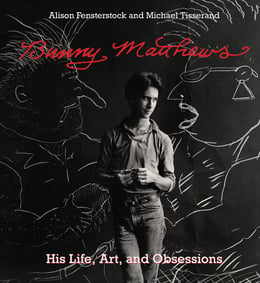
The bold personality of New Orleans’s legendary cartoonist and writer springs from the page in this first monograph of his work by Alison Fensterstock and Michael Tisserand.
On October 29, join us in celebrating six decades of preserving, collecting, and making history. Save the date for music, memories, and more at what is sure to be a fantastic night out in the French Quarter.

edited by Kenneth Trist Urquhart
Written “in the midst of danger,” the Reverend William Lovelace Foster’s letter to his wife describes the 1863 siege of Vicksburg.
HNOC 1980; 5th printing 1997
softcover • 5½" x 8½" • 112 pp.
17 b&w images
ISBN 978-0-917860-12-6
$7.95
The siege of Vicksburg, which began in mid-May 1863, lasted an incredible 47 days. As it progressed, the Reverend Mr. William Lovelace Foster, conscious of the drama and the tragedy taking place around him and of which he was a part, decided to write his wife a letter describing life in the beleaguered city. Foster began his letter on June 20 and wrote “at broken intervals of time,” with many interruptions, “in the midst of danger” from bullets and exploding shells. By the time the siege had ended and Vicksburg had surrendered on July 4, 1863, Foster’s letter had grown to 79 pages.
Foster described the siege from the vantage point of the ordinary soldier—the enlisted man and junior officer with whom he associated daily, and to whom he ministered as army chaplain. A good reporter and a perceptive observer of human nature, Foster produced a unique eyewitness account of one of the most dramatic events of the Civil War. Describing the horrors of 19th-century warfare in realistic detail, revealing much about the good and the bad traits of men subjected to the torments of a protracted siege, refusing to soften war’s grim miseries with any romantic gloss, Foster bore witness to the spirit of the men who endured the siege of Vicksburg.
“This handsome volume fits nicely among the growing number of published Civil War primary sources written from the perspective of the common soldier.”
Louisiana History
Rev. Benjamin Palmer gained national fame—he went viral, in an 1860 sense—just as Southern states were deciding how to respond to Lincoln’s election.
Norbert Rillieux’s patented process of sugar refinement changed the world, but his career in the US was cut short by racism and the Civil War.
Still sold today, the sharp New Orleans tonic has its roots in the Civil War.
In Union-occupied New Orleans, a Civil War general attempted to subdue a riotous populace.
by Donald Peter Moriarty II
translated and introduced by Clint Bruce
with a foreword by Angel Adams Parham
Subscribe to Our Newsletter


