





“I think he had this quality that you would only see in New Orleans in that particular time. It’s a terrible loss, but I think he left us with extraordinary works that are going to be remembered for a very, very long time.”
Arthur Roger

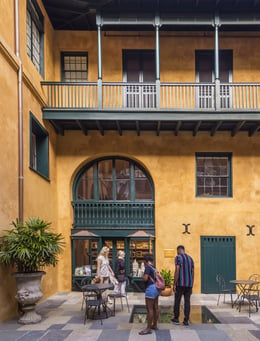
Enjoy free admission every day. Visit the museum, shop, and café, or resesarch our collections at the Williams Research Center.
Explore the world of the legendary New Orleans artist and his iconic characters, Vic and Nat’ly. On view until May 9, 2027.
On October 10, explore how film, music, video games, and media continually reshape our modern understanding of revolutionary ideas, hosted in conjunction with American Revolution: The Augmented Exhibition.
Dive into the Collection’s holdings with image-rich previews of treasures from New Orleans history.
On October 17, educators are invited to a free workshop, hosted in conjunction with American Revolution: The Augmented Exhibition, to help deepen student understanding of the American Revolution in Louisiana.
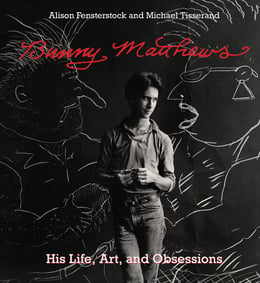
The bold personality of New Orleans’s legendary cartoonist and writer springs from the page in this first monograph of his work by Alison Fensterstock and Michael Tisserand.
On October 29, join us in celebrating six decades of preserving, collecting, and making history. Save the date for music, memories, and more at what is sure to be a fantastic night out in the French Quarter.
Prospect.5 spotlights the New Orleans photographer’s “othered” portraits.
By Dave Walker, communications strategist
Many of the subjects of George Dureau’s photographic portraits look directly at the camera’s lens. “I see you,” their eyes say. “See me.”
The faces the viewer sees are often those of “othered” people — Black people, queer people, little people, naked people, people missing a limb or limbs. People who may have been seen more for their differences from the mainstream than anything else. All are present in the selection of Dureau’s black-and-white photographs chosen by Prospect.5 Curator Grace Deveney for one of three of the citywide contemporary art triennial’s installations on view at the Historic New Orleans Collection through January 23, 2022.
“For the most part, they’re not people who would want to allow, or like, being photographed,” said Arthur Roger, from whose Julia Street gallery most of the Prospect.5 Dureau installation is on loan. “And somehow there was a comfort, and also obviously in some ways a desire, for them to be open and for George to be able to do his photographs. I think that is one of the main aspects that speaks about George. You get to see sort of the inside of these people in a quite remarkable, powerful way.”
John H. Lawrence, HNOC emeritus director of museum programs and himself a fine-art photographer, said Dureau’s portraits reveal a tangible intimacy between photographer and subject.
“George respected the people he asked to sit for him,” said Lawrence. “I don’t say that from a knowledge, just from what the photographs show. The direct stare into the camera, it may have been at George’s direction. Even with the gaze directed in that fashion, you don’t get the kind of quality you see in these portraits unless there is a mutual respect between the photographer and the subject. There is a vibe there that is based on these two people having respect for each other as the photograph is made.”
A New Orleans native, Dureau (1930–2014) studied art at Louisiana State University and architecture at Tulane University and served in the US Army. When Roger first met him in the 1970s, Dureau was known more as a painter and for his drawings.
“I was in college,” Roger said. “I worked at a gallery on Royal Street. I was a framer. And the French Quarter was a very different place then. There were a lot of eccentric people, and George was one of those very noticeable people that were in the Quarter.”
Dureau’s photography began as reference material for his other artwork, which frequently portrayed characters of mythology and religion (such as in his “The Parade Paused” mural, displayed inside Gallier Hall, where countless Carnival parades drawing on mythological themes have paused over the decades).
“If you work with anyone who does figurative work, they are always looking for models or they’re looking for some way to have a visual reference,” Roger said. “The photographs in the beginning were clearly for him to have a reference for his paintings. Then, later, I think he really grew and was able to recognize something he could do.”
Frequently cited as an influence on Robert Mapplethorpe (Roger once staged a comparative gallery show of both photographer’s work), Dureau’s photographs were never serendipitous, said Roger, who like many of Dureau’s friends and acquaintances posed for him.
“There was nothing casual about it,” Roger said. “Everything was very deliberate. Your head was forced in a very uncomfortable position. Your arms and shoulders and legs — there was nothing that wasn’t pushed into a place where he wanted it. You would feel that this is going to look terrible. When you saw the results of it, it looked perfectly normal. There was never anything accidental. That was part of who he was.”
Dureau was “a pure photographer,” Lawrence said, whose talent lay in his meticulous craftsmanship. “He was responsible for the posing, the lighting, the concept of the pictures, and releasing the shutter.
“The studio offers a lot of control for the photographer, maybe less so for the subject. When you’re in the studio, you’re kind of in there because the photographer wants you there.”
The Prospect.5 exhibition features studio photographs as well as images taken outdoors in various locations around the city, including the French Quarter, where Dureau maintained a noticeable persona until near the end of his life.
Suffering from dementia, he became the focus of a small group of concerned neighbors. The “Friends of George,” organized by email, helped see him through the early stages of decline before his relocation to a care facility. Roger, enlisting Dureau’s half-brother Donald Dureau, arranged for the Historic New Orleans Collection to acquire a trove of Dureau’s photos, artwork, and life ephemera.
“I think he had this quality that you would only see in New Orleans in that particular time. It’s a terrible loss, but I think he left us with extraordinary works that are going to be remembered for a very, very long time.”
Arthur Roger
“This was a Louisiana artist who had established himself in multiple fields of achievement,” Lawrence said. “That was an important thing for us.”
Said Roger: “Files, little prints – anything that looked of any importance, we boxed it and gave it to the Historic New Orleans Collection. We felt that it was a tremendous victory for George’s legacy.
“For George, I think it was a problem to recognize, in my mind, that the photographs were the most important body of work that he had done. Locally, I think that's quite the opposite. I think locally, people really embrace the paintings and drawings more. But there's no question in my mind that [his] photography will go on well beyond any of this.
“You know, I cared about him a lot. I think he had this quality that you would only see in New Orleans in that particular time. It’s a terrible loss, but I think he left us with extraordinary works that are going to be remembered for a very, very long time.”
When one New Orleans couple unsealed the attic of their Algiers house, they discovered a remarkable set of family portraits going back 135 years.
Photographer Ben Depp uses a paraglider to capture wetland views that are as beautiful as they are alarming.
The artist was an important figure in the French Quarter Renaissance, an effort by artists, authors, and architects to preserve and reinvigorate life in the historic neighborhood.
The ebullient nun documented her cloisters, sisters, and pupils with care and skill. In doing so she became the earliest known woman to photographically record daily life in New Orleans
Smith documented the music, parading, and Black folk traditions of New Orleans for decades.
A look at over 20 different photographic processes and techniques represented in HNOC’s holdings, from the daguerreotype to the digital prints of today.
Photographs by Richard Sexton capture the essence of a complicated, often mysterious section of the country’s largest waterway.
by Richard Sexton
with essays by Jay D. Edwards and John H. Lawrence
with essays by Jon Kukla, John H. Lawrence, Andrei Codrescu, Ellen Gilchrist, Shirley Ann Grau, Jonathan Williams, Albert Belisle Davis, and John Wood
New Orleans Stories,
Delivered to Your Inbox


