



Y’Unnerstan’?
Speaking “New Orleansese” with Bunny Matthews
By Emily Perkins, curatorial cataloger
November 24, 2026
By Emily Perkins, curatorial cataloger
A tourist from Ohio visiting New Orleans for the 1984 world’s fair walks into a Ninth Ward bar, sweating profusely. “How do you people live in this humidity?” he asks. “It’s good fo’ ya skin, Cap!” chortles a patron, sitting directly in front of an air conditioner pushing “99,000,000 BTUS.” Vic, the bar’s portly proprietor, chimes in from behind a tiny fan, “Yeah!! We save uh bundle on facelifts!” Later at home, Vic and his wife, Nat’ly, watch a TV news report about “OR-LEE-UNS Parish Prison,” a pronunciation that raises eyebrows. “Dat goil musta jus’ got here!” Nat’ly says, a beer in a fleur-de-lis koozie at her feet.
Across his iconic newspaper comic Vic and Nat’ly, his early series F’Sure, and his sprawling body of illustrated work, cartoonist Bunny Matthews used New Orleans accents to celebrate the city’s unique culture. Employing dialect spelling to mimic what is colloquially known as the “Yat” accent, Matthews courted criticism for his provocative use of language throughout his career. That same unruliness is what made his cartoons famous, beloved by locals, and vital to the history of late 20th‑century New Orleans dialects. The world of Vic and Nat’ly reflected a real, previously uncelebrated culture to readers who recognized their own language, humor, and daily realities in its panels. But viewed historically, Vic and Nat’ly also reveals the limits of the artist himself—the places where his perspective shaped, and sometimes constrained, what that world could show.

Born in North Louisiana in 1951, Matthews and his family moved just west of New Orleans to Metairie, then a growing postwar suburb, when he was nine years old. Matthews was fascinated by his largely Catholic and Sicilian classmates’ accents, speaking in “deez and dose and dems,” as he described it in a 1985 interview. “New Orleans was kind of exotic, and the way people talked, everything about them was unusual to me because I was from a Protestant family.” While he wasn’t a Yat himself, Matthews felt his cultural distance gave him a deeper appreciation for their eccentricities. Ironically, the accent that marked him as an outsider would later become foundational to his career. Tensions between insiders and outsiders were central to his work, where dialect functioned as a marker for locality and identity—a tension echoed in the history of the Yat dialect itself.
The roots of the Yat accent stem from early 19th-century immigration patterns. As the two largest pre–Civil War port cities in the United States, New York and New Orleans welcomed many of the same immigrant groups from Europe, including Germans, Irish, Italians, and Jews. As a result, similar speech patterns emerged in both—the reason why Yat sounds more like Brooklyn than the Deep South. These immigrant communities settled along the riverfront, particularly in the racially mixed Ninth Ward and Irish Channel. Work in port industries brought them into daily contact with other ethnic groups like Creoles of color, shaping the city’s distinct linguistic landscape.
The term Yat—drawn from the greeting, “Where y’at?”—came to describe white, working-class New Orleanians with immigrant backgrounds and specific dialect patterns. In linguistic terms, these include th-stopping (“dey” and “dat”), raising of "ah” vowel sounds (“cawfee”), coil-curl merger (“terlit” and “boid”), and r-lessness (“Supadome”). In the second half of the 20th century, largely due to white flight, the locus of the Yat accent shifted further out to the suburbs of Metairie and Chalmette, where it can be heard most often today.

Notably, the term “Yat” was not self-applied. In a 1988 Times-Picayune column about Yats, Angus Lind wrote, “No one calls himself a Yat. Not even a Yat. . . . Yat is not a derogatory term, more of an affectionate tease.” Though Matthews claimed he disliked the term three years prior, Lind added, “It’s guys like me and cartoonist Bunny Matthews who call them Yats.” No matter what Matthews called them, he first started honing his talents recording and writing their speech in the mid-1970s.
Early in his career at the alternative newsweekly Figaro (1972–81), Matthews and his colleagues were crusaders for the historic preservation movement. As the Louisiana oil boom of the 1970s modernized New Orleans’s urban landscape, Figaro advocated for the protection of historic buildings, as well as the preservation of the city’s linguistic heritage. Matthews would become the latter cause’s champion with the debut of his Figaro comic, F’Sure (1976–80), which documented “actual dialogue heard on the streets of New Orleans” in cartoon form. Here, Matthews developed his surreal, misshapen characters and acute Yat transliteration skills that would later define Vic and Nat’ly.
“I wunna if dey got any sof crabs today?” a rotund, sweaty, balding man holding a warm beer asks his restaurant tablemates in a cartoon Matthews drew for an August 1977 Figaro story titled, “How to Talk Like a Real Nawluns Native.” The article, which acts as a “New Orleansese” glossary, defines phrases such as “for true,” “I’d like to-uh died,” and the correct pronunciation of “wrench your hands” in the “zinc.” The staff at Figaro frequently sought to define what it meant to be a “real New Orleanian” in their pages, a torch Matthews carried for the rest of his career.

The success of F’Sure led to the 1982 debut of Vic and Nat’ly, featured in the Times-Picayune’s Sunday supplement, Dixie. The series starred Matthews’s avatars of all things Yat, Vic and Nat’ly Broussard—a white, working-class married couple who ran a Ninth Ward po-boy shop and traded observations from behind the bar counter. Boisterous, overweight, and wary of tourists, they were nevertheless affectionate and deeply rooted in local traditions, celebrating Mardi Gras and St. Patrick’s Day and cheering on the Saints year after year.
By the mid-1980s, Vic and Nat’ly were everywhere: TV shows, fridge magnets and beverage trays at D. H. Holmes department store, limited-edition Schwegmann’s grocery bags, and even the Audubon Zoo (as portrayed by live actors). After Dixie stopped publishing in 1986, Matthews continued drawing them for local publications until 2009, bringing them to the pages of TV Focus, Wavelength, Gambit, and OffBeat, as well as the sides of Leidenheimer bread delivery trucks.
Matthews exploited any and all Yat linguistic features for comedic effect, producing more of a funhouse mirror than a faithful reflection of their real‑world usage. Some thought Matthews’s exaggerated dialect spelling, along with his grotesque illustration style depicting raffish and rude locals, made New Orleans look bad. Less than a month after Vic and Nat’ly first appeared, Yorke Corbin, whose family once ran the Times-Picayune, wrote a letter to the editor saying, “Although there are flashes of wit in Mr. Matthews’s cartoons, the main joke seems invariably to be that his subjects are ugly and stupid. I feel that Bunny Matthews’s work insults me as a New Orleanian.” It’s unlikely Matthews lost any sleep over that letter, as Corbin’s prominent uptown family were exactly the kind of people he enjoyed riling up. Matthews used standard American dialect spelling for uptown characters and tourists to show that they didn’t share the same culture as “quintessential New Orleanians.”
With his infrequent depiction of Black characters, other critics saw a landscape that didn’t reflect the city’s population. The makers of the documentary film Yeah You Rite! asked why he rarely drew them in a 1985 interview, and he replied, “That would be like a cheap shot. I think about that a lot, that I should have Black characters and Black people in there. But the state of our society nowadays, it would just be used to ridicule them.” Matthews recognized that phonetic renderings of Black speech carried a fraught history, long used in American literature to advance racist stereotypes. Regardless of his intention, the result is a false landscape: a Ninth Ward with few Black people. Black characters that did appear in Vic and Nat’ly rarely had dialogue, placed in the background rather than the action. The New Orleans readers see is filtered through the eyes of Vic Broussard, to whom Matthews assigned a whole host of prejudices, bad behaviors, and ignorance—often leaving it unclear whether those attitudes were being satirized, celebrated, or simply reproduced.


In a 2016 research paper, “Ain’t Dere No More: New Orleans Language and Local Nostalgia in Vic and Nat’ly Comics,” linguist and professor Dr. Katie Carmichael dives into Matthews’s racial exclusion: “The representation of these linguistic features as linked to the white population of the city not only misrepresents the linguistic landscape of New Orleans in terms of these white speakers, it erases the existence of Black speakers who actually use these features currently, but who do not fit the racially narrow definition of Yats as ‘authentic’ New Orleanians.” Carmichael cites evidence that many Yat expressions were shaped by African American English, most notably the phrase “who dat.”
In a mixed, majority-Black city, New Orleans’s many ethnic groups have been influencing each other’s speech for centuries. “Dialect is not rigid,” says former Louisiana Poet Laureate Dr. Mona Lisa Saloy, “because the environments we share shape our semantics.” Saloy employed dialect spelling in her poetry collection Black Creole Chronicles (2023), which captured Black New Orleans speech like “padna” and “ya heard me?”
“I think it helps to show who people really are and their way of looking at things,” Saloy says. She believes it was right for Matthews not to depict Black accents as a white cartoonist in the 1980s, but also suspects the dialect he celebrated was more influenced by Black culture than he knew.
Vic and Nat’ly were in print for 27 years, commenting on politics, local news, and everyday culture. Matthews’s comics offer a valuable record of New Orleans in the late 20th and early 21st centuries, including what people talked about, complained about, and sounded like. Regardless of the tensions and controversies surrounding his work—or perhaps because of them—Matthews left an undeniable impression on the city, turning Vic and Nat’ly into enduring symbols of a New Orleans that, as locals often say, “ain’t dere no more.”
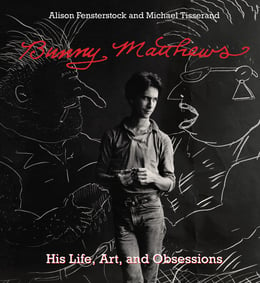
HNOC’s exhibition and accompanying monograph, Bunny Matthews: His Life, Art, and Obsessions, are a chance to explore local culture through his cartoon lens. Matthews’s work will serve as a guidebook to New Orleans, including the good, like the joys of Carnival; the bad, like Hurricane Katrina’s devastation; and the ugly, like 1990s Louisiana politics. Museumgoers will hear the dialect that made Matthews famous through an interactive audio feature with recordings of locals from the greater New Orleans area. The exhibit also includes the award-winning 1985 documentary Yeah You Rite!—originally produced with supporting visuals from HNOC’s holdings—which captures New Orleans accents at the height of Vic and Nat’ly’s popularity.

Related Exhibitions
Bunny Matthews: His Life, Art, and Obsessions
Explore the world of the legendary New Orleans artist and his iconic characters, Vic and Nat’ly.

Related Books
Related Events
“North Pole Nutrias” Holiday Happy Hour

Related Stories

How Vic and Nat’ly Became Crescent City Cartoon Classics
Bunny Matthews’s signature characters distilled everything that fascinated him about New Orleans—the good, the bad, and the bizarre—and became enduring icons in the process.

Promoting Tipitina’s in Its Raucous Early Years
Through unusual posters and interviews with two of Tipitina’s co-founders, we take a look back at the club's early years.
Related Collection Highlights

Bunny Matthews Archive
In a substantial new acquisition, the archive of a distinctly New Orleans cartoonist comes to HNOC.

Vintage Tipitina’s Posters
HNOC cataloger Emily Perkins picks her favorites from the Tipitina’s posters in the Michael P. Smith Collection.
Related News

WWL-TV Previews Bunny Matthews Exhibition Opening September 18

Beyond Bourbon Street Podcast Talks Bunny Matthews

Updated: Mark Your Calendar for These Upcoming Bunny Matthews Book Events
Related Shop Items


New Orleans Stories,
Delivered to Your Inbox
