








Carte de Visite of “The Scourged Back” Photograph
HNOC acquired an original copy of the infamous image that took Civil War-era America by storm, quickly becoming a tool of the abolitionist cause.
The man faces away from the camera, his face visible only in profile. His exposed back is covered in a heavy web of scars—the result of a violent punishment likely received the prior year while enslaved on a plantation. The untitled photograph, commonly referred to as “The Scourged Back,” is now among the most well-known images of the American slave system. Originally issued as an inexpensive and easily reprinted carte de visite in the spring of 1863, it circulated widely. (A carte de visite is a photographic print mounted to a card. Unlike daguerreotypes and ambrotypes, which are one-of-a-kind images, cartes de visite were created from a negative, allowing unlimited copies to be made.) By the summer of that year, the image reached audiences across the nation via an engraved reproduction and article in Harper’s Weekly, quickly becoming a tool of the abolitionist cause.

Three different versions of “The Scourged Back” exist, but they are so similar that they have coalesced in popular memory as a single image. The photographs were taken, likely on two separate days, in Baton Rouge in 1863, attributed to photographers William D. McPherson and A. J. Oliver. The sitter has been most consistently identified as a formerly enslaved man from Louisiana, possibly named Gordon or Peter, who escaped from a nearby plantation and crossed into Union territory. By 1863 this type of action was becoming more commonplace, especially in Louisiana, where enslaved men, women, and children were fleeing to the protection of the Union Army in increasing numbers as part of a mass movement that historian W. E. B. DuBois described as “a general strike.” Many quickly took up support roles and eventually filled the ranks of what would become the United States Colored Troops, representing a surge in fighting power that became critical to US victory.

On the back of the carte de visite, a facsimile of a handwritten inscription from an assistant surgeon reads explains that he “[has] found a large number of the four hundred contrabands examined by me to be as badly lacerated as the specimen represented in the photograph.”
McPherson and Oliver had been working in Baton Rouge at least since Union occupation in the spring of 1862. The date range of their activity in Louisiana, as well as the subjects, clearly points to their involvement with the US army and the Union cause. HNOC holds a sampling of other images of theirs from the war years, most of which show buildings of the area as well as parts of Civil War campaigns in Baton Rouge and Port Hudson.


Of all McPherson and Oliver’s images, however, “The Scourged Back” had the widest reach, making a powerful impact on the nation’s visual understanding of the first photographed war in the United States. HNOC had sought a copy of this image for years, and in early 2025 we were able to purchase an example. The photograph enriches our holdings related to the Civil War, slavery in America, and photography. HNOC can also put the photograph into local context, as it was made in Louisiana and depicts a former Louisiana resident. This image had a meaningful impact on the American experience of the Civil War and on the abolitionist cause. Over 160 years later, it continues to illustrate with photographic precision the violence and horrors of American chattel slavery.
by Eric Seiferth, curator/historian
More from Our Holdings
Collection Highlights
Dive into the Collection’s holdings with image-rich previews of treasures from New Orleans history.

Related Stories
A Long Arc of Injustice
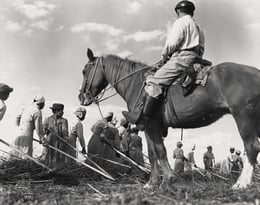
Once the hub of the domestic slave trade, Louisiana now leads the world in incarceration, with Black people disproportionately affected. HNOC’s exhibition Captive State traces the roots of this inequity all the way back to the founding of the state.

Beyond the Planter’s Pen
Two decorative arts fellows are part of a growing wave of scholars challenging established norms in the field.
Related Collection Highlights

Cane River Collection
Over 1,400 legal and financial documents amount to a detailed record of one slice of 19th-century Black Creole life.

Elmwood Plantation Menu
This stylish menu from a restaurant in a former plantation home belies the site’s dark history of human enslavement.
Related Virtual Exhibitions
Purchased Lives: New Orleans and the Domestic Slave Trade, 1808–1865
A groundbreaking examination of America's perpetuation of the slave trade and New Orleans’s role as a hub of slave trading.

Related Books


Related News

New Exhibition Explores Historical Links Between Slavery and Mass Incarceration

HNOC Book “Captive State” Receives Southeastern Museum Conference Publication Award

WGNO: Born a Slave, Sold Six Times. Meet New Orleans's First Coffee Barista
Subscribe to Our Newsletter
