






Delight & Distraction
Material Culture of Southern Amusement
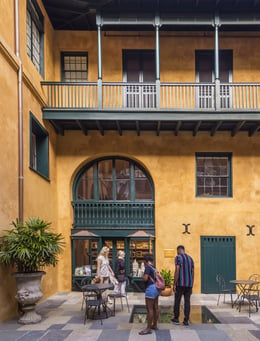
Williams Research Center
410 Chartres Street
Member registration opens May 27
General public registration opens June 2
About
Step right up to the fascinating world of southern pastimes and play! The 2025 Antiques Forum will explore the history of southern amusement through its eclectic material culture—objects that reveal the sights, textures, and stories of life’s pleasures amid the region’s complex history. With sessions on board games, the circus, nineteenth-century pleasure gardens, and how Thoroughbred breeding helped make horse racing a nationally hailed pastime, this weekend promises a playful assortment of delight and distraction.

registration
Registration opens for HNOC members on Tuesday, May 27, at 9:30 a.m. (CDT) and to the general public on Monday, June 2, at 9:30 a.m. (CDT).
- Friday sessions only: $175
- Saturday sessions only: $175
- Sunday sessions only: $60
- Full Forum, all sessions: $360 (add all three days to cart and save $50)
- Optional Sunday Brunch at Arnaud’s Restaurant: $90 (add to cart at checkout)
Museum and university professionals and young participants (ages 21–30) enjoy half-price tickets for single-day admissions.
New! Patron Pass
Enjoy the ultimate Antiques Forum experience with a guided tour of the HNOC vault and a Saturday evening cocktail reception, followed by dinner with the speakers, sponsors, and HNOC board and staff. Availability is extremely limited.
$600 per person, includes:
- Full Forum, all sessions
- Guided HNOC vault tour
- Cocktail reception
- VIP dinner
Note: Sunday Brunch is not included in the Patron Pass, but may be added to your cart at checkout.

Friday, August 8
Events are held in the Boyd Cruise Room, Williams Research Center, 410 Chartres Street, unless noted otherwise.
Williams Research Center, 410 Chartres Street
Daniel Hammer, President and CEO of the Historic New Orleans Collection
Tom Savage, moderator, Colonial Williamsburg Foundation
An introduction to the 2025 New Orleans Antiques Forum
Betsy Golden Kellem, independent scholar and author
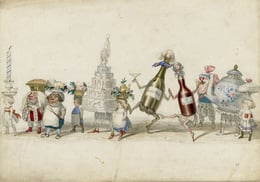
Circus is a distinctly American entertainment. From the nation’s founding days, through Gilded Age splendor, and into an age of elephant parades and arena shows, the circus directly influenced generations of audience members with colorful, reality-stretching entertainment. This talk will take you through the spectacular history of the American circus and use material culture—wagons, costumes, parades, souvenirs, foodways, music, models, trains, posters, and more—to show how circus has always reflected, drawn from, and influenced American pop culture.
Williams Research Center, 410 Chartres Street
Claudia Pfeiffer, National Sporting Library & Museum
In the nineteenth century, American horsemen championed the reestablishment of Thoroughbred breeding and spurred the resurgence of horse racing as a nationally hailed pastime. A heavily publicized series of antebellum North-South match races and their sporting rivalries swept the nation. The endeavors of icons like Alexander Keene Richards, a Kentucky-based Thoroughbred breeder who imported Arabians from the Middle East, and the Virginian William Ransom Johnson, known as the “Napoleon of the turf,” were immortalized by Edward Troye (1808–1874), today recognized as among the best equestrian portraitists of the era.
Lunch on your own in the French Quarter
Lydia Blackmore, Nina Bozak, and Kendric J. Perkins, the Historic New Orleans Collection
The Historic New Orleans Collection actively collects books, documents, art, and artifacts relating to the history and culture of New Orleans, Louisiana, and the Gulf South. Curators Nina Bozak and Lydia Blackmore will share some recent amusing acquisitions. Education and Outreach Specialist Kendric J. Perkins will present the highlights of HNOC’s chess collection, including a chess set owned by New Orleans–born chess master Paul Morphy.
Sarah Duggan, the Historic New Orleans Collection
Decorative Arts of the Gulf South (DAGS) project manager Sarah Duggan will share about graduate summer interns’ recently completed research and interpretation of a variety of objects previously catalogued by DAGS. Their investigations revealed new historical context that tells the wider stories of everyday objects. This year’s team was the third to delve into the David Weeks and Family Papers at LSU, seeking more information about textiles and enslaved seamstresses at the Shadows-on-the-Teche in New Iberia.
The Decorative Arts of the Gulf South project at the Historic New Orleans Collection is an initiative that documents and shares information about pre-1865 material life in Louisiana, Mississippi, and Alabama. Duggan leads DAGS’s work through data management, cataloging fieldwork, archival research, and two internship programs. She cocurated the exhibitions Pieces of History: Ten Years of Decorative Arts Field Work and Unknown Sitters. Duggan holds a master’s degree from the Winterthur Program in American Material Culture at the University of Delaware and a bachelor’s in history and religious studies from the College of William and Mary.
Led by curators of the Historic New Orleans Collection
Mix and mingle with fellow program attendees over libations and hors d’oeuvres.
Saturday, August 9
Williams Research Center, 410 Chartres Street
Tom Savage, Colonial Williamsburg Foundation
Daniel Hammer, President and CEO of the Historic New Orleans Collection
Dr. Emelie Gevalt, American Folk Art Museum
Joining a proliferation of newly produced commercial games, homemade game boards from the nineteenth and early twentieth centuries express the fresh excitement of making more space for play within American daily life. Game boards provide deep insight into the values and priorities of American culture. Examples give material form to ideals of religion and morality, as well as to underlying concepts of competition, entrepreneurship, and risk-taking as fundamental to American life, as in the classic game of Monopoly, invented at this time. Perhaps most powerfully, game boards convey the potent aesthetic sense of a society plunging into modernism, embracing the abstracted geometries that upended traditional artistic boundaries at the turn of the twentieth century.
Presenting recent gifts to the American Folk Art Museum from longtime collectors Bruce and Doranna Wendel, this lecture will revel in the aesthetic thrill of these objects while exploring the greater cultural meaning beneath them.
Williams Research Center, 410 Chartres Street
Dr. Allison Robinson, The New York Historical
This session explores the richly layered world where handmade cloth dolls—crafted primarily by Black women between 1850 and 1940—tell powerful stories about race, gender, and American history. This lecture delves into the artistry and cultural significance of doll making and play, uncovering how these seemingly simple objects reflect complex social histories and challenge racial stereotypes.
Allison Robinson, PhD, is the associate curator of history exhibitions at The New York Historical. Robinson received her MA and PhD in history from the University of Chicago and an MA from the Winterthur Program in American Material Culture at the University of Delaware. Since joining The Historical, she has curated multiple exhibitions and installations, including Title IX: Activism On and Off the Field; Crafting Freedom: The Life and Legacy of Free Black Potter Thomas W. Commeraw; Kara Walker: Harper’s Pictorial History of the Civil War (Annotated); Women’s Work; and Running for Civil Rights: The New York Pioneer Club, 1936–1976. Robinson also contributed research and text to the exhibition Black Dolls.
Lunch on your own in the French Quarter
Tara Gleason Chicirda, Colonial Williamsburg Foundation
Billiards was a popular pastime in eighteenth-century Virginia. While the presence of billiard tables in private Virginia homes was quite limited, the form appeared more commonly in urban taverns where men of all ranks in society could mingle, play, and perhaps gamble. Tara Gleason Chicirda will share research on the form and pastime in colonial Virginia, as well as details on the installation of an eighteenth-century English billiard table in Colonial Williamsburg’s Raleigh Tavern.
Williams Research Center, 410 Chartres Street
Leslie B. Grigsby, Winterthur Museum
Throughout history, most ceramics and glass served utilitarian purposes (storage, cooking, or food or beverage service) or were for ornamental use, such as vases or figures. They reflected their owners’ wealth level, social standing, and aspirations. In contrast, other wares were created purely for their entertainment value. Consider “trick” or puzzle jugs, which spilled their contents on wealthy and less financially secure drinkers alike. Some vessels revealed surprising imagery that emerged as a beverage was consumed; others lampooned political or military figures. All of these objects were made just for fun.
Lake Douglas, Louisiana State University
This presentation looks at selected examples of privately owned commercial venues that provided recreation opportunities for residents of nineteenth-century New Orleans at a time when there were few such locations in the city. With origins in European precedents, New Orleans examples offer insight into how local cultural factors determined access, use, activities, and accommodations in these spaces of leisure. Local cultural influences made New Orleans examples unique in America, and, in turn, defined expectations for both recreation activities and public open spaces in the decades that followed.
Sunday, August 10
Williams Research Center, 410 Chartres Street
Daniel Hammer, President and CEO of the Historic New Orleans Collection
Tom Savage, Colonial Williamsburg Foundation
Peggy Scott Laborde, host of Steppin’ Out on WYES-TV
The Pontchartrain Beach amusement park, located on the south shore of Lake Pontchartrain in New Orleans, operated from 1928 until 1983 as one of the city’s most beloved attractions. In this session, local journalist Peggy Scott Laborde will share images and memories of Pontchartrain Beach drawn from her 2007 documentary, Along Lake Pontchartrain.
Williams Research Center, 410 Chartres Street
Dr. Miki Pfeffer, Nicholls State University
Throngs of visitors came to New Orleans in 1884–85 to absorb the vast inventory at the World’s Industrial and Cotton Centennial Exposition. They also came to be entertained. Manufacturers vied for their attention with extravagant displays and small giveaways. The fair’s promoters devised “manifold attractions” and events to please the crowds. Here, we look at amusements on the fairgrounds and beyond the fences of this late-nineteenth-century spectacle.
Kenneth Hoffman, Museum of the Southern Jewish Experience
Southern Jewish summer camps gained prominence after World War II, providing a space for Jewish culture, education, community, and play in the South. Kenneth Hoffman will share objects, stories, and the history of these regional summer camps and their lasting significance through the present day.
Daniel Hammer, President and CEO of the Historic New Orleans Collection
Tom Savage, Colonial Williamsburg Foundation
Arnaud’s Restaurant, 813 Bienville Street
$90 per person ** (add on at checkout)
Celebrate the conclusion of the 2025 Antiques Forum with our traditional Sunday brunch at Arnaud’s—a cherished finale to the weekend’s events. Enjoy bottomless mimosas, classic Creole cuisine, and be the first to hear about the 2026 Forum theme!
Brunch Menu
Passed hors d’oeuvres:
Gruyère puff filled with Fontina cheese
Soufflé potatoes with béarnaise sauce
First Course:
Shrimp Arnaud
Served atop fried green tomato
Second Course:
Gulf Fish Milanese
Dill tartar, arugula salad
Third Course:
Mango Coconut Cheesecake
Coconut dulce de leche, mango gelee
** Hosted Mimosas, Bloody Marys, Milk Punches, and house sparkling, red, and white wines are included in the per-person price

Speakers

Lydia Blackmore
The Historic New Orleans Collection
Lydia Blackmore
Lydia Blackmore is a curator at HNOC specializing in material culture, design, Carnival, and architecture. She earned an MA and certificate in museum studies from the Winterthur Program in American Material Culture at the University of Delaware. She also holds a degree in history from the College of William and Mary. As a curator, Blackmore oversees research, acquisition, and preservation of decorative art, fine art, material culture, and design collections. She is also coordinating preservation projects at HNOC’s historic 533 Royal Street campus. In her 12 years at HNOC, Blackmore has curated or cocurated several exhibitions, including Making Mardi Gras (2022), A Vanishing Bounty (2024), and Unknown Sitters (2024). Outside of HNOC, she is a member of the board of trustees of the Historic BK House and Gardens.

Nina Bozak
The Historic New Orleans Collection
Nina Bozak
Nina Bozak is a senior curator at HNOC who works with acquisitions, rare books, and performing arts collections. She received her undergraduate degree in history at Loyola University in New Orleans and her master’s degree from the Palmer School of Library and Information Science at Long Island University, concentrating on rare books and special collections. Her 15 years at HNOC were preceded by four years in the special collections libraries at Tulane University and Dillard University, as well as three in the rare book trade of New York at Swann Auction Galleries and Bauman Rare Books.

Tara Gleason Chicirda
Tara Gleason Chicirda
Since 2002, Tara Chicirda has curated a number of exhibitions at the Art Museums of Colonial Williamsburg including A Gift to the Nation: The Joseph and June Hennage Collection and Keeping Time: Tall Case Clocks. Prior to coming to Williamsburg, Chicirda held curatorial positions at the New Jersey Historical Society and the Winterthur Museum, where she also assisted with an exhibition mounted at the National Gallery of Art. Her research projects have taken her from Rhode Island to Georgia, and she has published widely on American furniture in The Magazine Antiques, Antiques and Fine Art, the Chipstone Foundation journal American Furniture, and the Journal of Early Southern Decorative Arts. Her most recent article “Keeping Time: Tall Case Clocks” was published in Antiques and Fine Arts (Summer 2021) and “A Rhode Island Cabinetmaker in Kentucky: Revelations of a Clock Reexamined,” co-authored with Mack Cox, was published in American Furniture (2018). Chicirda graduated magna cum laude from Amherst College and holds a master of arts degree from the University of Delaware’s Winterthur Program in Early American Culture.

Lake Douglas
Lake Douglas
Lake Douglas holds degrees in landscape architecture from LSU and Harvard and in urban history from UNO. His research draws on nineteenth-century agricultural, horticultural, and gardening literature; census data; newspapers; commercial records; maps; and other sources to gain new insights into the evolution of local cultural landscapes. He has published nationally and internationally in books, articles, and critical reviews and presented his research at American and European professional conferences. He was guest curator for HNOC’s 2001 exhibition In Search of Yesterday’s Gardens: Landscapes of Nineteenth-Century New Orleans, recognized with an Honor Award from the Louisiana chapter of the American Society of Landscape Architects.

Sarah Duggan
Sarah Duggan
Sarah Duggan is the project manager of the Decorative Arts of the Gulf South (DAGS) project at the Historic New Orleans Collection, an initiative that documents and shares information about pre-1865 material life in Louisiana, Mississippi, and Alabama. She leads DAGS’s work through data management, cataloging fieldwork, archival research, and two internship programs. In 2021 she cocurated the exhibition Pieces of History: Ten Years of Decorative Arts Field Work. Duggan holds a master’s degree from the Winterthur Program in American Material Culture at the University of a Delaware, and a bachelor’s in history and religious studies from the College of William and Mary.

Emelie Gevalt
Emelie Gevalt
Dr. Emelie Gevalt is deputy director and chief curatorial and program officer at the American Folk Art Museum (AFAM) in New York City. Her exhibitions at AFAM include the critically acclaimed What That Quilt Knows About Me (2023) and Unnamed Figures: Black Presence and Absence in the Early American North (2023). Gevalt received her BA in art history and theater studies from Yale University, her MA from the Winterthur Program in American Material Culture at the University of Delaware, and her PhD in art history from the University of Delaware. Her two decades of art-world experience include positions at the Museum of Fine Arts Boston and Christie’s, New York, where she was a vice president in the estates, appraisals, and valuations department.

Leslie B. Grigsby
Leslie B. Grigsby
Leslie B. Grigsby, senior curator of ceramics and glass at Winterthur Museum, Garden, and Library, is responsible for more than 20,000 ceramic and glass objects. She received her BA in art history from the University of Illinois and her postgraduate diploma in art gallery and museum studies from the University of Manchester in England. Grigsby has published extensively on seventeenth- and eighteenth-century ceramics, design sources, and the histories of dining and drinking. She was instrumental in sending online Winterthur’s catalogue of more than 90,000 objects and has curated numerous major exhibitions. Grigsby has lectured across the US, Canada, and the UK, as well as in China and Australia.

Daniel Hammer
Daniel Hammer
Daniel Hammer is dedicated to preserving the history and culture of New Orleans through his work as president and CEO of the Historic New Orleans Collection, where he has worked for nineteen years, serving in various capacities including head of reader services and deputy director. Daniel earned a bachelor’s degree in German literature from Reed College and a master’s degree in historic preservation from Tulane University School of Architecture. He currently serves as chair of the French Quarter Museum Association and as a member of the board of the Vieux Carré Commission Foundation and the New Orleans Jazz & Heritage Foundation Advisory Council.

Kenneth Hoffman
Kenneth Hoffman
Kenneth Hoffman is the executive director of the Museum of the Southern Jewish Experience in New Orleans. A historian with degrees from Tulane University and the University of Bristol, he has held key roles at the Louisiana State Museum, the New Orleans Museum of Art, and the National WWII Museum, where he served as director of education for eighteen years. A past president of the Louisiana Association of Museums, Hoffman brings decades of experience in museum leadership, education, and cultural preservation.

Betsy Golden Kellem
Betsy Golden Kellem
Betsy Golden Kellem is a scholar of the unusual. Her writing on circus and entertainment history has appeared in venues including The Atlantic, Vanity Fair, The Washington Post, The Public Domain Review, Smithsonian, Atlas Obscura, and Slate. Kellem has served on the boards of the Barnum Museum and the Circus Historical Society and is an Emmy winner for her Showman’s Shorts video series on P. T. Barnum. She is a columnist for JSTOR Daily and regularly teaches and speaks for academia and industry. If you ask nicely, she will juggle knives for you.

Peggy Scott Laborde
Peggy Scott Laborde
Peggy Scott Laborde is an Emmy Award-winning producer and the host/producer of Steppin’ Out, New Orleans’s only weekly arts and entertainment discussion program, now in its 38th season on WYES-TV.
Laborde is a board member of the City Park Improvement Association and the New Orleans Museum of Art. She served as the president of the Tennessee Williams and New Orleans Literary Festival for a total of 14 years and continues to serve on the Festival's board. She is also the co-author of four books and has produced over 30 documentaries for WYES focusing on the food, culture and history of New Orleans. Laborde is the producer of documentaries on the history of the French Quarter, St. Charles Avenue, Canal Street and Bourbon Street.

Kendric J. Perkins
Kendric J. Perkins
As part of HNOC’s education department, Kendric J. Perkins develops curricula, tours, and programs that highlight the rich and complex stories of New Orleans. A fourth-generation New Orleanian, Perkins descends from both enslaved and free people of African descent in Louisiana, with family roots tracing back to the colonial era. This deep personal connection to the region’s history informs his work, which is grounded in a decolonized framework. His research interests include the history of chess in New Orleans, the legacy of Black chess players across the Americas, and chess’s ties to coffeehouses and revolutionary movements.

Claudia Pfeiffer
Claudia Pfeiffer
Claudia Pfeiffer has a thirty-year background in fine art and exhibitions and has been with the National Sporting Library and Museum since her position was underwritten by the George L. Ohrstrom Foundation in 2012. During her tenure, Pfeiffer has overseen more than sixty fine art exhibitions and written extensively on sporting art and history. Her projects include Munnings Out in the Open: The Open-Air Works of Alfred Munnings; Clarice Smith: Power and Grace; Sidesaddle, 1690–1935; Identity and Restraint: Art of the Dog Collar; Honoring the Point: The Gwynne McDevitt Sporting Dog Collection; and Intrepid Audubon: The Birds of America. Her essay “Ellen Emmet Rand: Artist and Equestrian” was published by Bloomsbury Academic in 2020.

Miki Pfeffer
Miki Pfeffer
Miki Pfeffer edited A New Orleans Author in Mark Twain’s Court: Letters from Grace King’s New England Sojourns. She also authored Southern Ladies and Suffragists: Julia Ward Howe and Women’s Rights at the 1884 New Orleans World’s Fair, which won the Welty Prize. She speaks often on aspects of culture during the long nineteenth century and especially on Grace King , the subject of her continuous study. Affirming the adage that historians are people who like to read others’ mail, Dr. Pfeffer’s mission is to transcribe all the correspondence in King’s archived papers.

Allison Robinson
Allison Robinson
Allison Robinson, PhD, is the associate curator of history exhibitions at The New York Historical. Robinson received her MA and PhD in history from the University of Chicago and an MA from the Winterthur Program in American Material Culture at the University of Delaware. Since joining The Historical, she has curated multiple exhibitions and installations, including Title IX: Activism On and Off the Field; Crafting Freedom: The Life and Legacy of Free Black Potter Thomas W. Commeraw; Kara Walker: Harper’s Pictorial History of the Civil War (Annotated); Women’s Work; and Running for Civil Rights: The New York Pioneer Club, 1936–1976. Robinson also contributed research and text to the exhibition Black Dolls.

Tom Savage
Tom Savage
In 2021, Tom Savage was appointed director of educational travel and conferences for the Colonial Williamsburg Foundation, following a sixteen-year career at Winterthur Museum, Garden, and Library as director of museum affairs and director of external affairs. From 1998 to 2005, he was senior vice president and director of Sotheby’s Institute of Art, where he directed Sotheby’s American Arts Course, and from 1981 to 1998 he served as curator and director of museums of the Historic Charleston Foundation. A native of Virginia, Savage received a BA in art history from the College of William and Mary and a master’s degree in history museum studies from the Cooperstown Graduate Program of the State University of New York. Savage currently serves on the board of governors of the Decorative Arts Trust. He is a former trustee of the Royal Oak Foundation, the Attingham Summer School, and the Sir John Soane’s Museum Foundation. In addition, he served as a presidential appointee to the Committee for the Preservation of the White House from 1993 to 2002.
Support
The 2025 New Orleans Antiques Forum is made possible by generous support from our sponsors.








Explore the Antiques Forum
Since 2008, HNOC’s New Orleans Antiques Forum has brought together antiques aficionados, scholars of material culture, and fans of finery in a weekend-long celebration of history and aesthetics.

Related Stories

Threads of Motherhood
The clever construction of a maternity dress offers an intimate glimpse into 19th-century motherhood.

Possessed by the Past at Shadows-on-the-Teche
An antique armoire gives insight into a New Iberia plantation's complicated history and road to preservation.
Material Culture from our Holdings

Meeks Dresser
A fine example of early 19th-century furniture, this dresser has a hidden drawer.

Leila’s Collectible Boxes
A look inside the Williams Residence offers insight into some of the interior decorating styles of the late 1940s and early ’50s, as well as Leila Williams’s personal collecting interests.
Related Virtual Exhibitions
Goods of Every Description: Shopping in New Orleans, 1825–1925
Peer into shop windows of the 19th and early 20th centuries.

Related Books


New Orleans, the Founding Era
edited by / édité par Erin M. Greenwald
translated by / traduit par Henry Colomer

Garden Legacy
by Mary Louise Mossy Christovich and Roulhac Bunkley Toledano
with a foreword by S. Frederick Starr
Subscribe to Our Newsletter
