








Duck Decoys
The Anne and Dick Stephens Collection of Wildfowl Artifacts
HNOC is the home of more than 300 hand-carved decoys and other works of art by southeastern Louisianan craftsmen.
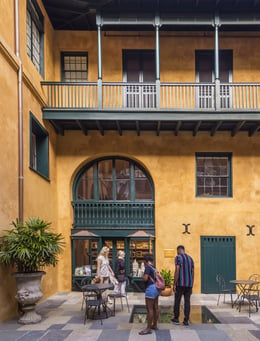
533 Royal Street
The Historic New Orleans Collection is proud to announce the donation of more than 300 hand-carved decoys and other works of art by southeastern Louisianan craftsmen. The Anne and Dick Stephens Collection of Wildfowl Artifacts, part of which is on display at 533 Royal Street, celebrates the talent and dedication of the men who devoted themselves to this region’s distinct carving traditions.
Although the tradition of decoy carving in America dates back to approximately 500 B.C., the earliest surviving examples from Louisiana are far more recent—dating only to the 1800s. Until the mid-20th century, the primary purpose of “working ducks,” or decoys carved to help hunters attract their prey, was functional, not aesthetic. No formal training existed for early carvers, and community carving circles served as informal apprenticeships. After World War II, when the introduction of plastic decoys made their wooden counterparts less economically competitive, wildfowl carving began its transition from folk art to fine art.
The display presents a changing selection of decoys, as well as prints portraying waterfowl subjects in their Louisiana habitats, many by the same artists who are better known as carvers.


Related Stories

Pushed to the Coast by Man, Indigenous Louisianans Feel Nature’s Push Back
Hurricane Ida represents another wave in a centuries-long saga of forced migration and environmental adaptation.

Ida’s Place in Louisiana’s Long History of Hurricanes
A climatologist compares Ida with other cataclysmic storms in Louisiana history.
Related Exhibitions
A Vanishing Bounty: Louisiana’s Coastal Environment and Culture
Discover the beauty and history of Louisiana’s natural environment—as well as the threats to its continued existence.

Related Books

Subscribe to Our Newsletter
