







“The colored woman has a crown of thorns continually pressed upon her brow. Yet she is advancing, and sometimes you find her further on than you would have expected.”
—Sylvanie Williams, New Orleans civil rights activist

Enjoy free admission every day. Visit the museum, shop, and café, or resesarch our collections at the Williams Research Center.
Explore the world of the legendary New Orleans artist and his iconic characters, Vic and Nat’ly. On view until May 9, 2027.
On October 10, explore how film, music, video games, and media continually reshape our modern understanding of revolutionary ideas, hosted in conjunction with American Revolution: The Augmented Exhibition.
Dive into the Collection’s holdings with image-rich previews of treasures from New Orleans history.
On October 17, educators are invited to a free workshop, hosted in conjunction with American Revolution: The Augmented Exhibition, to help deepen student understanding of the American Revolution in Louisiana.
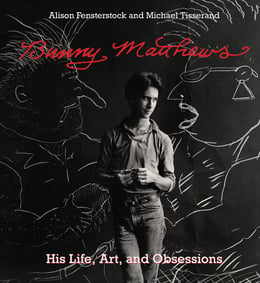
The bold personality of New Orleans’s legendary cartoonist and writer springs from the page in this first monograph of his work by Alison Fensterstock and Michael Tisserand. Preorders now available!
On October 29, join us in celebrating six decades of preserving, collecting, and making history. Save the date for music, memories, and more at what is sure to be a fantastic night out in the French Quarter.

Students write letters to New Orleans civil rights leader Sylvanie Williams about the state of equality in America today.
In conjunction with HNOC’s exhibition “Yet She Is Advancing”: New Orleans Women and the Right to Vote, 1878–1970, our 2023 Student Writing Contest challenged high school and middle school students from across the country to answer a series of questions in the form of a letter to New Orleans civil rights leader Sylvanie Williams. They were asked to express their feelings about the status of rights and freedoms in the United States from 1920 to the present day, what progress has been made, and whether Williams would be proud of the state of equality in our country today.
“The colored woman has a crown of thorns continually pressed upon her brow. Yet she is advancing, and sometimes you find her further on than you would have expected.”
—Sylvanie Williams, New Orleans civil rights activist
2nd Place: Benjamin Wu, grade 7, Narrows View Intermediate, University Place, WA
“Thank you for unlocking in me, and maybe countless others what we never knew we possessed: hidden under a shy exterior, an inner strength, and the willingness to fight for what is right. Your spirit will continue to light on us, and we will continue the fight!” Read the letterOpens in new tab
3rd Place: Noah Hochron, grade 6, Bricolage Academy, New Orleans, LA
“As you know, education for African American kids has not always been easy, or even allowed. . . . In 1960, at just 6 years old, Ruby Bridges was the first person to integrate a white school in New Orleans! But now, segregation has largely returned to New Orleans schools.” Read the letterOpens in new tab
Honorable Mention: Aenea Hester, grade 8, Audubon Charter School, New Orleans, LA
“As a teenage girl, I should not have had to be given a talk after Roe v. Wade was overturned, informing me of the unchangeable fate that the government has given me. . . . Women are rarely believed when it comes to sexual assault, especially when the assaulter is well known. How is it that almost every woman knows a survivor, but no man knows a perpetrator?” Read the letterOpens in new tab
Honorable Mention: Sophia Foster, grade 7, Homeschool, Round Rock, TX
“The fact of the matter is, we have made worlds of progress, but we’re behind where we could be. The circumstances you were born to and what you look like are still the most important factor of any American’s life. Even one hundred years later, people are still willing to keep what they have and take more, to the detriment of others.” Read the letterOpens in new tab
Amara Nwabueze, grade 9, Zachary High School, Zachary, LA
Dear Sylvanie Williams,
This last century has been one long war. Warriors crying for change, troops marching into battle, the globe rumbling from every step, every voice. Still, we are advancing. We have continued fighting, even when the foot of inequality sought to squash us down, to pull us from our roots. The passage of the 19th Amendment was a spark that ignited the flame of civil rights activism in America. However, these days I find myself asking: Is that fire dying out? Have we stopped and settled just because our initial battles were won? Is this home of the brave really the land of the free? The United States has undergone a lot of change since 1920, and I think you would find the nation farther on than you would have expected. But today, even though we have been presented with a new assortment of problems, I believe we have the capability to do so much more.
After women were granted suffrage, social movements began to bloom across the nation. People refused to have their rights denied any longer. Protesting proved to be an effective solution to the inequality still residing in society. In the late 1940s, the Civil Rights Movement took flight. It involved multiple sit-ins, nonviolent protests, and boycotts all with the mission of protecting the rights of every American, regardless of gender, origin, and most notably, race. I believe the achievement of this mission was restrained for far too long. The 14th and 15th amendments for equal citizenship and voting rights had been ratified almost 70 years ago, yet many people still faced discrimination. The issue was not the lack of laws and regulation. It was the slow implementation of those laws that pushed us behind. That chained us down when we could have been free to enjoy liberty. The good thing, however, about oppression is that it highlights the weaknesses in a country and reveals to the people the things that need to be altered if freedom is to be achieved. Without a battle we would have no war. We would all remain ignorant to the problems happening around us. Thankfully, many things have occurred to develop the nation’s perspectives. 1954, Brown v. Board of Education ends racial segregation in public schools. 1964, The Civil Rights Act is signed by President Lyndon B. Johnson, prohibiting discrimination by race, gender, or origin in employment. 1990, the Americans with Disabilities Act is signed, prohibiting discrimination against people with disabilities. Whether it was for a specific race, gender, social class, nationality, marriage, or way of thinking, people have refused to let their rights be infringed upon. Unfortunately, there were many setbacks along the way. Assassinations attempted to silence voices, courts didn’t always rule in our favor, and legislation tried to bind us instead of facilitating freedom.
I believe that you, Mrs. Williams, would believe that with all these accomplishments, all these feathers in our caps, the nation has surpassed your expectations. A lot has changed since the 1920s. However, I think that with the amount of communication, technology, and ideology that have become available over the years, we shouldn’t still be fighting the same battles. We should be much farther on. Messages and ideas can be spread so much faster and to a wider audience, yet women are still not always welcome in the workplace, African Americans still face discrimination, and many people are still denied the right to choose. I am not saying that I am not proud of the progress we’ve made, but it’s disappointing that the adversity that we have already overcome is still allowed to exist. We can’t tolerate regression, not after all the progress we’ve made. The greatest defeat is when we become stationary. Silence and stillness are the breeding grounds for oppression, while battles can birth greatness and change. If we want to protect the rights that activists like you have established, then we have to make America advance. No more waiting around when there are so many other rights to protect, futures to inspire, and wars to be won.
Sincerely,
A Young Flower of America
Amara Nwabueze
2nd Place: Ty’Leah Briggs, grade 10, St. Katharine Drexel Preparatory, New Orleans, LA
“If life was a crystal stair, the feeling of making it to the top wouldn’t be as rewarding as going up a staircase with twists, turns, and tacks. Thank you for fighting to protect the mistreated flowers that are constantly trampled underfoot.” Read the letterOpens in new tab
3rd Place: Iris Xue, grade 11, the Mississippi School for Mathematics and Science, Columbus, MS
“Though the world may seem like it has advanced into a more bottomless pit of chaos and controversy, I assure you that the fight for equal rights is still worthwhile. I believe the women’s movement could never have advanced unless it expanded to encompass more issues, the issues of all women in America.” Read the letterOpens in new tab
Honorable Mention: Phoebe Fannin, grade 9, Zachary High School, Zachary, LA
“We should take inspiration from the people who fought to give us the rights and freedoms we enjoy today. We should care enough to take action. My generation is the future of America. If we don’t care, who will?” Read the letterOpens in new tab
Honorable Mention: Mia Scott, grade 9, Zachary High School, Zachary, LA
“Living safely is a basic human right that is threatened for women simply living. . . . Women continue to persevere in the quest you started to end discrimination and violent acts committed against them, to create greater gender equality, and to maintain control over their own bodies.” Read the letterOpens in new tab
Learn about HNOC’s annual student writing contest and read winning submissions from previous years.
Read winning selections from previous contest years, below.
Student writers reflect on experiences that have inspired them to create change, in response to HNOC’s NOLA Resistance Project.
Students submit works of poetry and prose in response to HNOC’s book Afro-Creole Poetry in French from Louisiana’s Radical Civil War-Era Newspapers.
Students craft imaginative short stories that explore Mardi Gras Day in New Orleans.
Students write letters to New Orleans civil rights leader Sylvanie Williams about the state of equality in America today.
Students pick up the pen where our curators left off and imagine details about the unknown portraits featured in HNOC's 2024 exhibition Unknown Sitters.
Students respond to themes inspired by HNOC’s exhibition Making It Home: From Vietnam to New Orleans, commemorating the 50th anniversary of the fall of Saigon.
Students address important civil rights issues facing America today and in the future, inspired by the HNOC exhibition The Trail They Blazed.
Portraits of women who fought for equality, justice, and charity
The story of women’s suffrage, leading up to and beyond the passage of the 19th Amendment
In the summer of 1920, the 19th Amendment to the US Constitution was ratified, removing sex as a barrier to voting rights. The fight started long before that.
Whickam was a beautician, community leader, and national civil rights organizer who helped thousands of Black Americans access their right to vote.
Eliza Jane Nicholson was a pioneering New Orleans journalist who loved her dog so much, she memorialized him in photo, verse, and even jewelry.
Subscribe to Our Education Newsletter


