






Six Things About the Five-String
The Cultural Impact of the Banjo
Six items from our holdings that tell the story of a uniquely American instrument
By Terri Simon, associate editor, and Molly Reid Cleaver, senior editor
April 12, 2023
By Terri Simon, associate editor, and Molly Reid Cleaver, senior editor
Today, banjos are associated in popular memory with Appalachia, bluegrass music, and folksy porch-dwellers sitting with “a banjo on my knee,” but the instrument has a more diverse history than most people realize. Enslaved Africans in the Caribbean developed the banjo, drawing from West African stringed-gourd instruments and the European guitar and lute. African American practitioners popularized it throughout the 18th and early 19th centuries, after which white blackface minstrel performers brought it even further into mainstream popular culture. HNOC explored the history of this American instrument in the 2023 Bill Russell Lecture, but our online catalog abounds with banjo discoveries available to view anytime. Here are six objects from our holdings that illustrate this distinctive part of music history.

Everything but Scarlet
In Everything but Scarlet, James “Jim” Flora (1914–1998) presents a Southern plantation scene, with a large plantation house tucked into a lush landscape of trees. In the background, a man and woman in the dress of members of the planter class stand hand-in-hand, while two boys play in the grass. In the foreground, a barefoot Black man sings and plays the banjo. The title seems to be a reference to Gone with the Wind’s Scarlett O’Hara.
Flora included Everything in a collection of New Orleans–themed engravings commissioned by Union Central Life Insurance Company of Cincinnati. Flora had never been to the city when he created them, but the woodcuts resonated with a large audience. The engravings were so popular with readers that UCL released them as a limited-edition folio in 1942.

Banjos appear in two of the woodcuts from the New Orleans portfolio: Everything and the cover image. Other woodcuts from the set depict a stylized Jackson Square, a Black woman carrying flowers in a basket on her head, and a swamp scene whose title, The Eden of Louisiana, is probably a reference to Henry Wadsworth Longfellow’s Evangeline: A Story of Acadie.
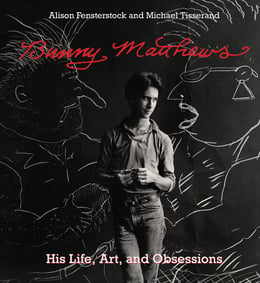
The New Orleans portfolio was one of Flora’s earlier commercial projects. Over his six-decade-long career, he created hundreds of works of commercial and fine art and wrote and illustrated 17 books for children. He is best known for the jazz and classical album covers he illustrated for Columbia Records and RCA Victor (now RCA Records) in the 1940s and ’50s. His graphically bold, iconic work helped to define the visual style of the 1950s and ’60s.

Examples of Flora’s cover art, clockwise from top left:
A mix of cubism and modernism, Flora’s distinctive style is like Henri Matisse’s cut paper collages, but on acid. Flora’s vibrant contrasting colors are absent from the New Orleans portfolio, but aspects of his style are visible in the banjo woodcuts—the exaggeratedly stylized faces of the musicians recall his depiction of Louis Armstrong on a later album cover; the plants in the background of the engravings anticipate the swirling graphic shapes he later used to embody the energy of jazz.
The Boswell Sisters at the Orpheum Theater
Though the banjo is typically associated with male musicians—Johnny St. CyrOpens in new tab, Danny BarkerOpens in new tab, Walter WilcoxOpens in new tab—the Boswell Sisters broke the mold. Vet, Connie, and Martha Boswell were uptown New Orleans girls raised in a musical household and trained from a young age in the classical tradition. Brother Clydie played violin in a vaudeville orchestra and became well-versed in the emerging “hot jazz” style, passing on those rhythms and harmonic innovations to his sisters, who incorporated them into their singingOpens in new tab. The Boswell Sisters’ close-harmony style made them starsOpens in new tab of the early days of radio.


Before reaching national fame, they became local favorites, as seen in this photograph of the Boswells at the Orpheum Theater in 1925. Vet sits with her banjo, Connie at the piano, and Martha with saxophone. They were still in school at the time. Through such seated stagings in publicity images, Connie concealed her inability to walk, owing to a childhood case of polio.
In 2014 HNOC celebrated the Boswells with the exhibition Shout, Sister, Shout! The Boswell Sisters of New Orleans, and it remains on view online as a virtual exhibitionOpens in new tab.
Lobby card for It Happened in New Orleans
Originally released in 1936 as Rainbow on the River, this Kurt Neumann–directed film was rereleased under the title It Happened in New OrleansOpens in new tab in 1945. Set in the decade after the end of the Civil War, the film tells the story of a young white orphan in New Orleans named Philip, played by famed “boy soprano” Bobby Breen. Philip is taken in and raised by Toinette (Louise Beavers), a formerly enslaved woman who is also a gifted singer and banjo player. A kindhearted priest tracks down Philip’s paternal grandmother, a wealthy widow who lives in New York and detests Southerners. Philip’s charm and cheeriness—and his skill playing that quintessentially Southern instrument, the banjo—eventually win over his Yankee grandmother, and she accepts him as a member of the family.

The film employs common racial—and racist—language and tropes of the era. It is Black characters, not white ones, who represent the backwards Old South. They speak in exaggerated dialect and are depicted as simpletons. Abraham Lincoln Stonewall Jackson George Washington Lilybell Jones (Stymie Beard), a self-described “pickaninny” who is friends with Philip, is so ignorant that he hates Yankees even though he is named after Union heroes. Rainbow on the River was released two years after Imitation of Life, which also starred Beavers as the complicated, well-rounded character of Delilah—arguably the first time a major Hollywood motion picture centered a story on a Black woman without reducing her to a one-dimensional caricature. In Rainbow, though, Toinette embodies the trope of the “Magical Negro” or mammy.
Banjo Clock
The banjo clock, so named because it’s shaped like the instrument, was patented in 1802 by famed Massachusetts clockmaker Simon Willard (1753–1848). Light and compact, Willard’s timepiece was dependable and affordable. An eight-day clock, it needed to be wound only once a week. Willard’s shop produced thousands of the clocks. He also shared his innovative design with other clockmakers, and the popular timepiece spread from New England across the nation.

“Banjo” doesn’t appear in Willard’s original ads, and he probably wasn’t thinking about banjos specifically when he designed the timepieces. The term caught on around the turn of the 20th century, in connection with the Colonial Revival. That movement helped establish a national consciousness in the US, connecting the country’s disparate cultural regions through shared architecture, design, and decorative arts. That the name “banjo clock” stuck not only in the South but also in New England and the Midwest is evidence of the cultural impact of banjos across the nation.
“Michieu Banjo”
Also known as “Monsieur Banjo,” this is one of the Creole folk songs collected and arranged by New Orleans–raised folklorist and educator Camille Nickerson. The jaunty tune imitates the plucking rhythms of the title instrument, and the lyrics depict a dapper, cocksure man who dresses to the nines and struts down the street. This 1942 sheet music gives both the original French lyrics and English translation:

See that Mulatto over there, Mister Banjo, coming down the line
Hat turned on one side, Mister Banjo, walkin’ cane in hand
Smokin’ a big cigar, Mister Banjo, struttin’ to beat the band.
As Nickerson explains in a note accompanying the song, “Mister Banjo, the town dandy, is the envy of those who have neither his fine clothes nor his talent for entertaining on the banjo; moreover the envious pang is certainly not softened by the fact that he is a mulatto. Hence, Mister Banjo is the envy of much ridicule.” Indeed, at the end of the song, the narrator, having described every bit of Mister Banjo’s flair, describes him “ugly as homemade sin.”
Interview and Banjo Lesson with George Guesnon
Trigger warning for anyone who grew up taking music lessons with less-than-prodigious aptitude: this recording of jazz banjoist George Guesnon giving a lesson to beginner Dick Talbert might make you want to hide in a dark closet. The recording was made by prolific jazz collector and researcher Bill Russell, who was friends with Talbert, a photographer for the Associated Press, in the 1950s. Russell helped arrange lessons for Talbert with legacy musicians, some with Guesnon and others with Manuel Manetta, a multi-instrumentalist who played violin, piano, trumpet, and saxophone in addition to banjo and guitar.

Born in 1907, Guesnon played banjo in the bands of Oscar “Papa” Celestin, Willie Pajaud, and Sam Morgan. In the 1930s, when many jazz bands switched from banjo to guitar, Guesnon kept on the five-string, touring with the long-running vaudeville troupe the Rabbit Foot Minstrels. In the 1940s he recorded with Jelly Roll Morton, and he found work with George Lewis and others during the traditional-jazz revival.
In his lesson with Talbert, Guesnon explains that playing banjo is about more than just strumming and counting. “It’s not what you play, it’s how you play it,” he says. “You can see a man, plays banjo 50 years, knows the chords, but he still can’t sit in with a band because what he plays is mechanical—it has no feel. You see, you got to have the beat.”
His pep talk dispensed, Guesnon tells Talbert to play “Basin Street Blues.” Poor Talbert isn’t two full bars in when Guesnon stops him: “No, no, no, no—you hear what you’re doing?” Guesnon cautions against “jumping” to chords—being choppy with the changes rather than smooth and sure-handed. Talbert makes another wobbly attempt, and Geusnon stops him again: “You got no beat.” Ouch. “You got all the chords in here,” he tells Talbert, after rattling off and playing every chord in the song in quick succession. “But it’s up to you to put 'em where they belong.”
Related Stories

Parlor Music and Player Pianos
Before stereos and Spotify, people’s musical lives looked and sounded drastically different.

Related Collection Highlights

Jordan Noble Drum
Noble achieved lasting fame for his role in the Battle of New Orleans. His drum is a cornerstone of HNOC’s holdings related to the conflict and the War of 1812.

Les lys et les roses
A bound volume of eight pieces for piano and voice sheds light on the role of women in New Orleans’s 19th-century music scene.
New Orleans Stories,
Delivered to Your Inbox
