






Stories from 10 Years of Scavenging Attics, Porches, and Parlors
Since 2011, young scholars have spent their summers cataloging historic objects made or used in the Gulf South before 1865.
Story and photos by Sarah Duggan, DAGS coordinator and research curator
April 28, 2021
Story and photos by Sarah Duggan, DAGS coordinator and research curator
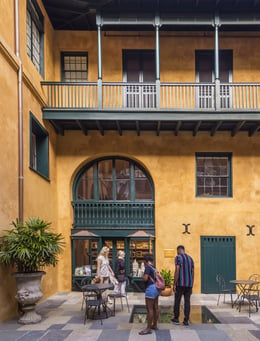
Since 2011, graduate students and other emerging museum professionals have spent their summers traveling throughout Louisiana, Mississippi, and Alabama cataloging historic objects made or used in the region before 1865. Records of these objects comprise the Decorative Arts of the Gulf South (DAGS) database that offers researchers a view of material culture beyond the region's museums and public collections. The new exhibit Pieces of History: Ten Years of Decorative Arts FieldworkOpens in new tab celebrates the 10th anniversary of DAGS, which was previously known as the Classical Institute of the South.

Each fieldwork experience is a classic American road trip paired with a historical scavenger hunt. No two years are just alike, but each team returns home with an abundance of adventure stories and a new appreciation for the people and places of the Gulf South. Here are some of our favorite memories from the past 10 years.

For example, the 2012 team worked entirely in historic homes with no air conditioning. They adjusted their working hours to start early in the morning to finish before the afternoon heat. Lea Lane, a 2015 fellow, fondly remembers the day her team settled on pink camouflage duct tape to reattach a broken side mirror to their Chevy Tahoe. Every DAGS team gets a reputation for being “those people who climb under furniture” as they study every aspect of an object.
Perhaps the most challenging summer was in 2019, when HNOC Decorative Arts Curator Lydia Blackmore and I were both “gestating while curating” before the birth of our sons. Since I had a higher-risk twin pregnancy, my doctor forbade me to travel beyond Baton Rouge.
Lydia accompanied the fellows to Natchez, where she only briefly got stuck examining the underside of a tester bed. The team made it back to New Orleans just before Hurricane Barry hit Louisiana!

Once the rains stopped, I took the fellows to St. Francisville, Louisiana. The park rangers at Oakley Plantation in the Audubon State Historic Site were very accommodating of my enormous state and drove me around the wooded paths in a John Deere Gator ATV. The fellows gladly handled all the furniture moving and equipment hauling. Fortunately, my baby boys stayed put until the Monday after our return. I will always fondly remember our last adventure together before their public debut.

Modern Surprises
When examining antique furniture that is still in daily use, we expect the unexpected. Rolls of Christmas wrapping paper might tumble out of an armoire, or a piano might be covered in family photos and knick-knacks we must remove for photos and replace just as they were. In one house museum, we discovered a long-forgotten sack lunch and pair of sweatpants a docent had stashed in a cabinet!
I’ll never forget how startled I was to open a bedroom drawer at the Demopolis, Alabama, house museum GaineswoodOpens in new tab and find these spare mannequin hands!

Each summer I make a mental note of fascinating items from the late 19th or early 20th centuries I like to call “too modern to catalog.” From ice crushing bags to a stash of 1940s magazines to mid-century appliances, the material culture of the Gulf South doesn’t stop at the Civil War.

Pets on Parade
Animals are a beloved part of southern culture, especially in rural areas. Meeting pets at a fieldwork site is always a highlight for DAGS teams. Over the years I have encountered more than I can count, including a cat who loved to sit on research materials, a curious pug who photobombed our furniture shots, and a bird-hunting dog named Ziggy Stardust Jenkins. At Oakley PlantationOpens in new tab in St. Francisville, the cries of a proud peacock named Indigo echoed around the park.

At a working family farm in Wilcox County, Alabama, we learned firsthand about livestock management. A curious herd of cows surrounded our vehicle, preventing us from unloading our equipment. The homeowners ushered us around back over a grate the cattle could not cross.
Some wildlife is harmful, like the wild hogs that rooted a trench in the front yard of our St. Francisville bed and breakfast. Lydia remembers how digging armadillos were the summer nemesis of DAGS founder Paul Haygood: “A night owl, I often got my turn on the single internet transmitter at nighttime, researching silver marks and retailers’ histories while the world around me was the pitch black of night in the country, periodically interrupted by the boom of Paul’s shotgun as he pursued the armadillo.”

Southern Hospitality
Like Blanche DuBois in the Tennessee Williams classic A Streetcar Named Desire, DAGS has always relied “on the kindness of strangers,” and Gulf South generosity has never disappointed. Not only do field work hosts let us turn their chairs upside down and examine their dresser drawers, but they also often provide free lodging. Past teams have slept in antique beds and eaten sack lunches on the very tables they just cataloged. Offers of local produce and cold drinks are plentiful; I quickly learned that refusing a 5 p.m. cocktail would be downright rude!

One of my favorite fieldwork souvenirs is from former Natchez mayor Larry “Butch” Brown. He had recently retired when we visited his house in 2016, and the front hall was full of mayoral memorabilia. Eager to clear out the space, his wife sent us all home with mementos. I declined the shovel from a local ground-breaking, but the wine glasses etched with the town logo were a welcome gift. A large magnet made to label official vehicles still adorns my refrigerator, and I smile every time I see it.
Want to help the DAGS project? If you have questions about DAGS, or want suggest a potential fieldwork site, contact DAGS Coordinator and Research Curator Sarah Duggan at sarah.duggan@hnoc.org.
Related Stories

How the Circus Helped Define Childhood, and Vice Versa
For a long time, the circus was no place for children. With the rise of mass manufacturing in the late 19th century and new ideas about childhood, that changed.

The Stories behind Readers’ Prized Possessions
We asked our audience to tell us the histories of their dearest heirlooms and household objects. They delivered.
Material Culture from our Holdings

Meeks Dresser
A fine example of early 19th-century furniture, this dresser has a hidden drawer.

Leila’s Collectible Boxes
A look inside the Williams Residence offers insight into some of the interior decorating styles of the late 1940s and early ’50s, as well as Leila Williams’s personal collecting interests.
Related Virtual Exhibitions
Goods of Every Description: Shopping in New Orleans, 1825–1925
Peer into shop windows of the 19th and early 20th centuries.

Related Books


Complementary Visions of Louisiana Art
with essays by William H. Gerdts, George E. Jordan, and Judith H. Bonner

New Orleans Stories,
Delivered to Your Inbox
