








Christmas Card to Tessie, Leona, Ruby, and Gail
During the height of the fight for school integration, supporters sent Christmas cards to four brave New Orleans girls.


Even though the Supreme Court’s decision in Brown v. Board of Education set the stage for school desegregation in 1954, the process did not actually begin in New Orleans until the fall of 1960. On Monday, November 14, four six-year-old Black girls, accompanied by US Marshals for protection, integrated two formerly all-white elementary schools. Ruby Bridges alone attended William J. Frantz Elementary, while Leona Tate, Tessie Prevost, and Gail Etienne together attended McDonough 19.
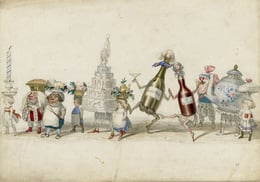
National media followed the events as they unfolded that November and December, which led to an outpouring of support for the first-grade girls during the Christmas season. In contrast to the verbal abuse that Ruby, Leona, Tessie, and Gail encountered outside of their schools, many sympathizers from across the United States sent Christmas cards offering them love and support. Of the cards on display in the Louisiana History Galleries at 533 Royal Street, I found this one to be particularly touching. The card shows four children of different ethnicities praying together—a simple, beautiful message of kindness and compassion during a dark period in our city’s history. Geraldine’s inscription reads, “God bless you, my dears,” and a poem printed inside the card celebrates diversity:
When Christ said,
“Let the children come to me!”
He wanted all children to sit at his knee.
He didn’t say, “Come,
If your skin is light.”
Or, “Come, if the slant
To your eyes is slight.”
For he knew it was not
The tone of the skin
That insured a man’s worth,
But the heart within!
This card touched me on a personal level. My mother was born in Rangoon, Burma, called Myanmar today. When she moved to New Orleans, where I was born, she experienced prejudice because of her ethnicity and accent. Because of her experience, she instilled in me a deep respect for humanity regardless of race and ethnicity. Sixty years after these brave little girls integrated New Orleans schools, it is important to keep their stories alive. I am grateful that the Historic New Orleans Collection has given me the opportunity to engage and speak to our visitors about this momentous event, and to show them the courage found in those four six-year old girls. The message of this card is timeless and powerful, showing that goodwill and kindness will always prevail among all peoples.
By Kelly Hamilton, visitor services assistant
Related Stories

Homer Plessy and the Activists Who Fought Segregation All the Way to the Supreme Court
With Plessy v. Ferguson, Black activists fought to preserve rights gained after the Civil War. Their defeat marked the end of Reconstruction and the beginning of Jim Crow segregation.

The Integration of Audubon Park’s Pool and the Committee That Made It Happen
On a hot June day in 1969, black and white kids swam together for the first time in a symbolic civil rights victory for New Orleans.
Related Virtual Exhibitions
“Yet She Is Advancing”: New Orleans Women and the Right to Vote, 1878–1970
The story of women’s suffrage, leading up to and beyond the passage of the 19th Amendment

Related Collection Highlights

American Black Directory
A post-segregation sibling to the Green Book, this directory compiled information on Black-owned businesses across the country.
Related Books

A Life in Jazz
by Danny Barker
edited by Alyn Shipton, with an introduction by Gwen Thompkins

Unfinished Blues: Memories of a New Orleans Music Man
by Harold R. Battiste Jr. with Karen Celestan

Subscribe to Our Newsletter
