






“An exemplary graphic work built on a foundation of impressive scholarship.”
Kirkus Reviews starred review

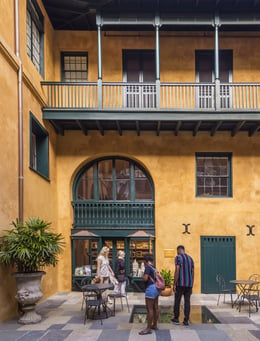
Enjoy free admission every day. Visit the museum, shop, and café, or resesarch our collections at the Williams Research Center.
Explore the world of the legendary New Orleans artist and his iconic characters, Vic and Nat’ly. On view until May 9, 2027.
On November 7, our 2026 Food Forum and Food Fête tasting event will explore the origins and deep community connections of Louisiana’s official state dish, led by renowned food historian Dr. Jessica B. Harris.
Dive into the Collection’s holdings with image-rich previews of treasures from New Orleans history.
On October 31, chess lovers of all ages are invited to join us for our fifth-annual Chess Fest, offering a day of free activities, including a beginner-friendly chess tournament, a “human chess” game, Halloween costume contest, chessboard crafting, and much more!
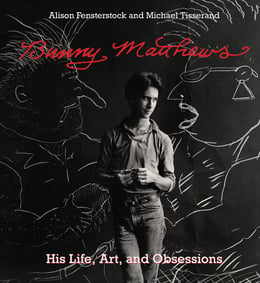
The bold personality of New Orleans’s legendary cartoonist and writer springs from the page in this first monograph of his work by Alison Fensterstock and Michael Tisserand.
On October 29, join us in celebrating six decades of preserving, collecting, and making history. Save the date for music, memories, and more at what is sure to be a fantastic night out in the French Quarter.

by Brian K. Mitchell, Barrington S. Edwards, and Nick Weldon
An award-winning graphic history telling the story of Oscar Dunn, a New Orleanian born into slavery who became America’s first Black lieutenant governor and acting governor
HNOC 2021
softcover • 7" x 10" • 256 pp.
180 fully illustrated pages
ISBN 978-0-917860-83-6
$19.95 • £15
$19.95
“An exemplary graphic work built on a foundation of impressive scholarship.”
Kirkus Reviews starred review
Monumental tells, for the first time, the incredible story of Oscar James Dunn, a New Orleanian born into slavery who became America’s first Black lieutenant governor and acting governor. A champion of universal suffrage, civil rights, and integrated public schools, Dunn fought for radical change during the early years of Reconstruction in Louisiana, a post–Civil War era rife with corruption, subterfuge, and violence. In life, allies and rivals praised him for his integrity and political talent. After his mysterious death, at the height of his feud with Governor Henry Clay Warmoth, New Orleans honored Dunn with one of the largest funeral processions in its history, and he was hailed as an African American icon. The state approved a monument to be erected in his memory, but it was never built. Dunn’s accomplishments, and those of many other Black politicians who emerged during Reconstruction, faded from memory.
A graphic history informed by newly discovered primary sources, Monumental resurrects, in vivid detail, Louisiana and New Orleans after the Civil War—and presents an iconic American life that never should have been forgotten. Contextual essays, a map, timeline, and endnotes add layers of depth to the narrative. Monumental is a story of determination, scandal, betrayal—and how one man’s principled fight for equality and justice may have cost him everything.
“In its diligent documentation, clear explanations, and dramatic story, Monumental will enhance and expand popular knowledge about Oscar Dunn and Reconstruction.”
Journal of the Civil War Era review
Brian K. Mitchell is director of research and interpretation at the Abraham Lincoln Presidential Library and Museum in Springfield, Illinois. A New Orleans native, Mitchell received a PhD in urban studies with a concentration in public history at the University of New Orleans. Mitchell’s writing and research primarily deals with race, violence, and the Elaine Massacre, and has been featured by CNN, NPR, and the Associated Press.
Barrington S. Edwards, an artist and community activist from Boston, earned a BFA in communication design and an MS in art education at the Massachusetts College of Art. He taught visual arts at the Boston Arts Academy for 19 years. He is an award-winning teacher and artist, a publisher of comics and graphic media, and works as a freelance artist and consultant. He teaches art education at the Massachusetts College of Art and Design.
Nick Weldon is an editor at the Historic New Orleans Collection. He has edited Enigmatic Stream: Industrial Landscapes of the Lower Mississippi River by Richard Sexton (2019), as well as materials for several major exhibitions. He was previously senior editor at Runner’s World and has written about a wide range of topics for outlets including Backpacker, SB Nation, Vice, New Orleans magazine, Garden and Gun, Paper Monuments, Sports Illustrated, and ESPN.com.
Messages from the past dispel the benevolent slaveholder myth.
In the summer of 1920, the 19th Amendment to the US Constitution was ratified, removing sex as a barrier to voting rights. The fight started long before that.
A rare collection of manuscript essays and family correspondence offers a thrilling look at one of the most influential people in the early struggle for African American civil rights in Louisiana.
HNOC acquired an original copy of the infamous image that took Civil War-era America by storm, quickly becoming a tool of the abolitionist cause.


