






Lin Emery Papers
The renowned sculptor’s papers shed light on her process, dedication, and artistic evolution.
The Historic New Orleans Collection recently acquired the collection of internationally renowned kinetic sculptor Lin Emery (1926–2021). The collection, donated by her son, Brooks Emery Braselman, provides an intimate view of her long and prolific artistic career. The collection includes two finished sculptures—Gathering (2018), a wind-powered piece, and Medusa (ca. 2020), the last artwork she exhibited—along with sketches, technical schematics, and extensive photo and film documentation. Particularly notable are four complete three-dimensional paper models of her finished sculptures, created early in her construction process.

At age 15, Emery enrolled at Columbia University before studying at a series of institutions around the United States and Canada. By the late 1940s she was living in Paris, attending the Sorbonne, and taking evening classes at the renowned Académie de la Grande Chaumière. She first trained as a sculptor in Paris, with Ossip Zadkine.
By the early 1950s, Emery had returned to New Orleans. Looking to expand her experience with different sculptural materials, she took a job as a studio assistant with Enrique Alférez. Knowing she wanted to work with metals, she sought out welding lessons but was rejected by Delgado Community College because of her gender. In 1952 she left New Orleans again to study at the Sculpture Center in Queens, New York, where she learned welding and casting.
Over the following years she traveled between New York and New Orleans. Her earliest works displayed in New Orleans were religious sculptures done for churches around the region. She was actively engaged in the New Orleans art scene, helping to found the Orleans Gallery in 1956 and organizing the 1976 International Sculpture conference in New Orleans. She also co-founded the Contemporary Arts Center of New Orleans.

She continued creating new works for decades, frequently drawing inspiration from nature. Water and wind powered the movement of some of her earliest kinetic sculptures, and she used magnets, electricity, and other creative mechanics in later works.
Emery’s papers are voluminous (totaling more than 40 linear feet) and paint a picture of her attention to detail and business acumen. The files include correspondence, detailed notes, and budgets for small- and large-scale projects completed around the country. One particularly well-documented project is her work carried out on behalf of the city of New Orleans to construct a memorial to Mayor deLesseps “Chep” Morrison (1912–1964) following his death in a plane crash. These files capture all the stages of the project, which she completed between 1966 and 1971 and comprised 13 water-powered sculptures and a 40-foot obelisk.

The collection also includes photo documentation of Emery’s world travels and education, including images of her learning to weld at the Sculpture Center in New York. Her general correspondence files document her work with other artists and her development of a robotics company. Taken together, the Lin Emery Papers are evidence of—and testament to—the lasting impact she had on contemporary sculpture, public art, and on the city of New Orleans.

By Aimee Everrett, curator
Related Stories

Dawoud Bey’s Ghosts of the Plantation South
The renowned artist’s Prospect.5 installation at HNOC shows that “history explains everything.”

How Vic and Nat’ly Became Crescent City Cartoon Classics
Bunny Matthews’s signature characters distilled everything that fascinated him about New Orleans—the good, the bad, and the bizarre—and became enduring icons in the process.
Related Collection Highlights

I Am the Black Woman
A rare series of 14 linocuts by Elizabeth Catlett carries her manifesto on behalf of Black American women.

Louisiana Alphabet
Lexical illustrations from the godfather of the Historic New Orleans Collection

La Famil[l]e de Pajaud
The New Orleans–born visual artist pays homage to his roots in this subdued, impactful watercolor.
Related Virtual Exhibitions

French Quarter Life: People and Places in the Vieux Carré
Artistic impressions of New Orleans’s most iconic neighborhood

From Cameo to Close-Up: Louisiana in Film
Explore how the picturesque scenery of Louisiana has provided the backdrop for films since the early 1900s.
Related Books


In Search of Julien Hudson: Free Artist of Color in Pre–Civil War New Orleans
edited and with an introduction by Erin M. Greenwald, with essays by William Keyse Rudolph and Patricia Brady
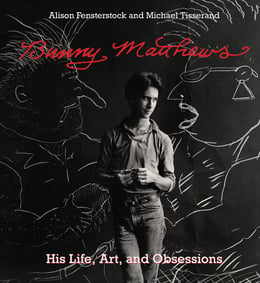
Bunny Matthews: His Life, Art, and Obsessions
by Alison Fensterstock and Michael Tisserand
Subscribe to Our Newsletter
