


Skip to content
The Historic New Orleans Collection
A vintage illustration of a 19th-century pharmacy interior. The room is filled with shelves of bottles. Several people, including pharmacists and customers, are engaged in transactions and conversations. The ceiling is ornately decorated.

Antiques

Today, Royal Street is a destination for antiques shopping. Many of the stores on the street were established by Jewish immigrants from Alsace-Lorraine and Austria-Hungary at the turn of the twentieth century. These stores got their start as pawnshops or secondhand furniture stores, but their proprietors gained an eye for fine antiques, eventually traveling back to Europe to import fashionable eighteenth-century pieces for their twentieth- and twenty-first-century customers. Generations of families have carried on the legacy of retail and shopping in New Orleans. 

Waldhorn’s Antiques (1881–2013)

Moise Waldhorn, an immigrant from Alsace, France, established a pawnshop, the People’s Loan Office, on the corner of Royal and Conti Streets in 1881. Waldhorn began to take in furniture and jewelry from families that were still suffering in the wake of the Civil War, and eventually his pawnshop became one of the earliest antiques stores in the city. Waldhorn’s Antiques operated in the same spot for over 130 years. 

A vintage photograph of a two-story building with a wraparound balcony featuring ornate wrought iron railings. The ground floor has large windows, an awning with the word ANTIQUES, and a person standing nearby on the corner.
Vintage advertisement for M. Waldhorn & Co., New Orleans. Features a list of antiques like ivories, bronzes, and furniture. Right side shows a drawing of early American figures in a shop setting. Elegant, old-fashioned design with red accents.
Two sepia-toned photographs of an antique shop interior, displaying various items like furniture, clocks, and decorative pieces on shelves and tables. The scenes are rich with detail, showcasing the stores extensive collection.
A vintage collage featuring a black-and-white photo of a store interior, a large 1880 New Orleans city license document, and a newspaper clipping dated March 1, 1888, from The Times-Democrat, all set against a beige background.
An aged poem titled In New Orleans by Eugene Field, addressed to Mrs. M. E. M. Davis. The poem describes aspects of New Orleans in a reflective and personal tone. The font is old-fashioned, and there is a note indicating it continues on the back.
Vintage advertisement for Antiques by M. Waldhorn, located at 341 & 343 Royal, Corner Conti. Offers items like fans, silverware, furniture, bric-a-brac, and more, described as A rare Collection from Old Creole Families. Decorative border elements included.

Feldman’s Antique Emporium; James H. Cohen & Sons (1898–)

Hungarian immigrant William Feldman got his start selling feathers for mattresses from a horse-drawn wagon in the late 1890s. His feather-mattress business quickly evolved into a secondhand furniture store with a special emphasis on antique beds. In the early twentieth century, Feldman had his own furniture workshop for manufacturing reproduction antiques to sell with the genuine artifacts in his store. Feldman’s Antique Emporium is still in operation, now in the fourth generation under the name James H. Cohen & Sons. 

A sepia-toned vintage photograph of two men in a cluttered antique shop. The shop is filled with various items like chairs, glassware, and decorative objects. One man stands behind a counter, while the other leans against a display case.
A vintage photo shows four people standing in front of a store with Emporium on the window. Two men stand on either side of a seated woman, while another man stands beside her. The storefront features ornate wooden pillars and large pots.
A sepia-toned vintage photograph of five ornate wooden chairs with intricate carvings and upholstered seats, each displaying unique designs, arranged in a row on a plain backdrop.
A black-and-white image featuring a collection of medieval armor and weapons. A suit of armor stands in the center with shields and spears on either side. Rifles line the wall to the left, and decorative pieces sit below the armor display.
Black and white photo of a room with an extensive display of rifles and pistols on the walls. A large antique table is in the center, and there are two chairs. The room has a vintage, historical feel.

Keil’s Antiques (1899– )

Hermina Keil emigrated from Alsace-Lorraine to Louisiana as a child. She got her start as a peddler in St. Francisville, gathering enough household goods in trade to open her own secondhand shop in New Orleans in 1899, which was known as the Royal Company in the early twentieth century. Keil became an expert in American silver and furniture, and her clientele included such notables as presidents Theodore Roosevelt and Woodrow Wilson. Hermina Keil’s descendants now operate three antiques stores on Royal Street: Keil’s, Moss, and Royal Antiques.

A vintage photograph of a jewelry store interior with wooden display cases and ornate decor. Three people stand behind the displays. Shelves and counters are filled with various items, and a ceiling fan is visible above.
Sepia-toned business card for Royal Co. offering antiques, art, jewelry, furniture, diamonds, silverware, and more. Established in 1899, located in New Orleans. Features an ornate vase illustration. Phone: Ray. 4693.
A vintage invoice from July 8th, 1925, for The Royal Company in New Orleans. It lists various items and prices, including a brass fire set, glass powder box, coffee pot, and more, totaling $2311.75.

Manheim’s Antiques (1919– )

Bernard Manheim emigrated from Austria at the turn of the twentieth century to work in the cabinetmaking shop at Feldman’s Antique Emporium. He married William Feldman’s sister Ida and opened his own antiques store just down the block from Feldman’s in 1919. Like other antiques dealers, Manheim made several trips to Europe to select stock for his store, which is now operated by his granddaughter Ida Manheim.

A vintage black sign with ornate yellow text reads “B. Manheim Antiques.” The sign has a weathered appearance with decorative corners and is hanging by a twisted metal handle.

Related Stories

View More
First Draft

For Decades, Mr. Bingle Ruled the Holidays on Canal Street

First Draft

For the Perfect Fit, They Went to the Jive Ass Shoemaker

Related Collection Highlights

View More
A vintage wooden dresser with four large drawers and ornate handles. It features a tall, rectangular mirror framed in the same wood, supported by two turned posts on either side. The dresser has a polished, dark wood finish.

Meeks Dresser

A fine example of early 19th-century furniture, this dresser has a hidden drawer.

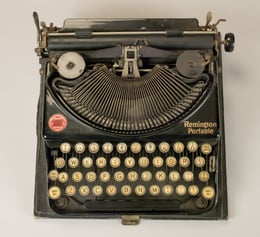
An antique Remington Portable typewriter with round keys and a black body, displayed on a plain background.

Tennessee Williams’s “Streetcar” Typewriter

Working on a black Remington, Williams wrote his masterpiece in a French Quarter apartment near the Desire streetcar line. 

A sepia-toned, vintage photograph of a small, fluffy dog sitting on a patterned surface. The dog has light-colored fur and appears relaxed, with one ear slightly perked up. The background is blurred, creating an antique effect.

Mementos of Mat, Eliza Jane Nicholson’s Dog

Eliza Jane Nicholson was a pioneering New Orleans journalist who loved her dog so much, she memorialized him in photo, verse, and even jewelry.

Stay Connected

Subscribe to Our Newsletter

Esto 2019 JG23 544 o6