






French Quarter Closeup: How Slavery Built New Orleans

Join us for this Shortcut Talk that takes an eye-opening look at how the institution of slavery shaped New Orleans.
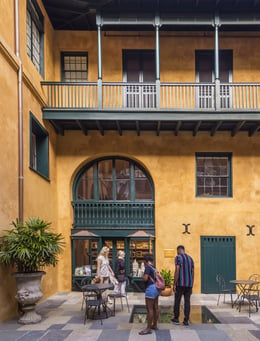
Join us for an eye-opening look at how the institution of slavery shaped New Orleans in this Shortcut presented in HNOC’s French Quarter Galleries. Through maps, images, and documents, our interpreters zoom in on a few blocks of the French Quarter to reveal this often-neglected aspect of New Orleans history.


Hear This Talk
Offered daily at 2 p.m., Wednesday–Sunday*
Free and open to the public (no registration required)
Duration: Approximately 20 minutes
Location: French Quarter Galleries, 520 Royal Street
*This talk is offered on a rotating basis with other Shortcut Talks and may not always be available on a given day.
For groups of 10 or more, please contact tours@hnoc.org.
Learn More
Shortcut Talks
Enjoy free, daily talks that explore Gulf South history and culture through the lens of our exhibitions.

Tours & Daily Programs
Get more out of your museum visit with a guided tour, Shortcut Talk, or daily program.

Related Stories

Reading Between the Lines of the Ursulines Nuns’ Prayer Books
The Ursulines brought education and health care to New Orleans, but they also helped to build and enforce Louisiana’s nascent racial caste system.

Beyond Nottoway
The mansion at Nottoway Plantation burned to the ground, but related sites survive across the South.
Related Collection Highlights

Cane River Collection
Over 1,400 legal and financial documents amount to a detailed record of one slice of 19th-century Black Creole life.

“The Scourged Back”
HNOC acquired an original copy of the infamous image that took Civil War-era America by storm, quickly becoming a tool of the abolitionist cause.

Elmwood Plantation Menu
This stylish menu from a restaurant in a former plantation home belies the site’s dark history of human enslavement.
Related Virtual Exhibitions
Purchased Lives: New Orleans and the Domestic Slave Trade, 1808–1865
A groundbreaking examination of America's perpetuation of the slave trade and New Orleans’s role as a hub of slave trading.

Related Books


Subscribe to Our Newsletter
