







HNOC Announces Extension of Exhibition Examining Incarceration in Louisiana
“Captive State” will be on view through February 16, 2025

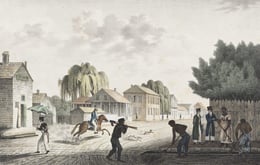 Captive State: Louisiana and the Making of Mass Incarceration
NEW ORLEANS — Due to overwhelming response from visitors, the Historic New Orleans Collection’s (HNOC) Captive State: Louisiana and the Making of Mass Incarceration, an interactive exhibition that explores the historical links between slavery and the state’s current distinction as the incarceration capital of the world, is extending its public viewing through Feb. 16, 2025.
After more than six years of research and preparation, HNOC debuted the limited time earlier this summer with plans to close the exhibition Jan. 19, 2025. Since opening in the summer of 2024, more than 11,000 people have explored the exhibition, learning about incarceration and the impacts on Louisiana’s communities. It has also drawn attention from incarceration advocates across the country, including John Legend and Marc Morial, and institutions including the MacArthur Foundation, the W.K. Kellogg Foundation, and the Roy and Patricia Disney Family Foundation.
Throughout Louisiana’s history, people in power have used systems of enslavement and incarceration to hold others captive for punishment, control and exploitation. Through historical objects, textual interpretation, multimedia and data visualization, “Captive State” explores the threads connecting slavery and mass incarceration.
“Since Louisiana’s colonial era, those in power have used the law to control, punish, and exploit others,” said Eric Seiferth, the exhibition’s lead curator. “Captive State documents how slavery and incarceration were mutually reinforcing in ways that have had long-term impacts on people in this state, particularly Black Louisianians.”
The exhibition first examines how Louisiana’s colonial and early American governments created race-based systems of oppression through legislation, policing, imprisonment, enslavement and violence that matured as New Orleans became the hub of the domestic slave trade. Visitors can then trace how the Louisiana Constitution of 1898, written to maintain white supremacy, enabled an era of mass incarceration in the 20th and 21st centuries.
“Captive State grapples with mass incarceration—a particularly salient discussion in Louisiana, where one in every hundred people is currently incarcerated,” said HNOC President and CEO Daniel Hammer. “In recognition of the varied personal experiences our visitors will bring to this exhibition, we explored new ways of engaging with guests around these important, sensitive topics and developed a tour that will invite them to contribute their own perspectives to the narrative.”
During the 90-minute “Piecing It Together: A Captive State Tour and Conversation,” visitors can examine the intricate relationship between slavery and modern-day mass incarceration in Louisiana. Along the way, participants are invited into a conversation about how incarceration impacts our communities today. The guided conversations take place Thursday–Saturday from 10-11:30 a.m. for a $5 suggested fee.
- Andrea Armstong, Loyola University New Orleans College of Law
- John Bardes, Louisiana State University
- Montrell Carmouche, Operation Restoration
- Anthony Hingle Jr., Voice of the Experienced (VOTE) and the Visiting Room Project
- Katie Hunter-Lowrey, organizer and survivor of violence
- Jee Park, Innocence Project New Orleans
Captive State is on view through Feb. 16, 2025, at 520 Royal St. in the French Quarter. Admission is free. Learn more about the exhibition and tour, below.
Captive State: Louisiana and the Making of Mass Incarceration
Learn how the institutions of slavery and mass incarceration are historically linked, and how these connections have made Louisiana the world leader in incarceration today.
Related Books
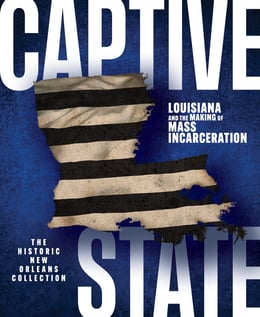
Captive State: Louisiana and the Making of Mass Incarceration
by Eric Seiferth, Katherine Jolliff Dunn, and Kevin T. Harrell (curators) and Nick Weldon (editor)
Related Exhibitions
Captive State: Louisiana and the Making of Mass Incarceration
Learn how the institutions of slavery and mass incarceration are historically linked, and how these connections have made Louisiana the world leader in incarceration today.
Related Stories

Death on Display
Louisiana’s travelling electric chair, and the shift from public to private executions

A Long Arc of Injustice
Once the hub of the domestic slave trade, Louisiana now leads the world in incarceration, with Black people disproportionately affected. HNOC’s exhibition Captive State traces the roots of this inequity all the way back to the founding of the state.
Related Collection Highlights

“Vernon C. Bain” Christening Ceremony Video
When New York City’s war on drugs sent incarceration rates soaring, officials commissioned a floating jail built and christened downriver from New Orleans.
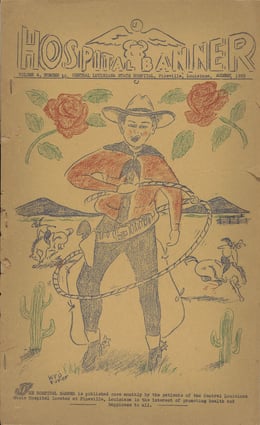
Hospital Banner Newsletters
An unusual periodical, written and produced by residents of the state mental hospital in the mid-20th century
Related News
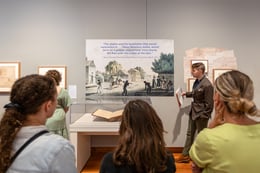
Innocence Project New Orleans to Honor HNOC with John Thompson Award for Courage & Justice

HNOC, LHA Select “The Carceral City” to Receive 2024 Williams Prize

New Video Goes Behind the Scenes of “Captive State” Exhibition and Companion Book
Subscribe to Our Newsletter
