







First Draft
Stories from the Historic New Orleans Collection

Latest Post
Huey Long, Tiger King
For years, the notorious Louisianan politician was also the unofficial football coach and bandleader of LSU.

Explore the Blog
Browse our latest posts or search by topic.

The Rise and Fall of John Law
The Scottish financier set off a speculation bubble that accelerated development in the early Louisiana colony—and nearly ruined the French economy.

Death on Display
Louisiana’s travelling electric chair, and the shift from public to private executions

Murder Before Breakfast: The French Market Killing That Shook New Orleans
Coffee maven Rose Nicaud declared that “everybody takes coffee at my stand,” regardless of race. After a man was shot near her stand, she entered the roiling Reconstruction-era debate over the limits of integration.

Louisiana v. Voting Rights, Then and Now
With a Louisiana redistricting case on the Supreme Court’s 2025–26 docket, the Voting Rights Act is once again under scrutiny. It’s not the first time Louisiana has tested the boundaries of the franchise.

Beyond Nottoway
The mansion at Nottoway Plantation burned to the ground, but related sites survive across the South.

Into the Heart of the Beast
As the 1961 Freedom Rides transfixed the nation, New Orleans civil rights activists played a crucial role.
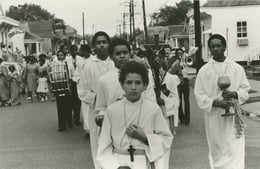
From the French Quarter to the Vatican
Shortly after Robert Francis Prevost was announced as the first American pope, HNOC’s Jari C. Honora uncovered a surprising New Orleans connection, revealing the pontiff’s maternal grandparents to be Creoles of color from the Seventh Ward.

Reading Between the Lines of the Ursulines Nuns’ Prayer Books
The Ursulines brought education and health care to New Orleans, but they also helped to build and enforce Louisiana’s nascent racial caste system.

Processing Hope and Loss in the Prison Portraits of “One Big Self”
Deborah Luster’s portrait series, taken inside prisons across Louisiana, confronts viewers with the human lives at stake in the incarceration capital of the world.
New Orleans Stories,
Delivered to Your Inbox

Cajuns & Creoles
From the French Quarter to the Vatican
Shortly after Robert Francis Prevost was announced as the first American pope, HNOC’s Jari C. Honora uncovered a surprising New Orleans connection, revealing the pontiff’s maternal grandparents to be Creoles of color from the Seventh Ward.

Creole Chic
Along with food and music, fashion was used by Louisiana Creoles to declare and express their unique identity.

Searching for Stories of Black Craftspeople in New Orleans
Two young scholars comb the archives to research a cabinetmaker, a boatbuilder, and a cooper.

From the 19th Century to the Nine-Nine
How Juvenile and Gottschalk brought New Orleans music to the world, 150 years apart.

Identity Theft
Nearly 35 years ago, a heedless conservator altered a rare portrait of a free woman of color. Now, it has been restored and is on view again—and this time, HNOC is telling the story.

Three Poets Respond to Afro-Creole Protest Poetry of the 1860s
HNOC asked three New Orleans poets to craft 21st-century responses to 19th-century protest poetry.

A Taste of Creole and Cajun Cuisine in 10 Stories
We look into the surprising backstories of some of South Louisiana’s most famous dishes.

The Civil War and the Rise of Black Activism
After the Union liberated New Orleans, Black activists fought for civil liberties and basic human rights.

What Does It Mean to Be Cajun?
We explore the roots of this complicated southern identity through 12 different stories.

Carnival Chronicles

Who’s a Good Boy? These Pups from the Past
For as long as dogs have been domesticated, there have been dog lovers. The evidence runs throughout HNOC’s holdings.

Joan of Arc: Maid of (New) Orleans
Every year, New Orleans kicks off Carnival season with a parade in honor of Joan of Arc. But what is her historical connection to Louisiana?
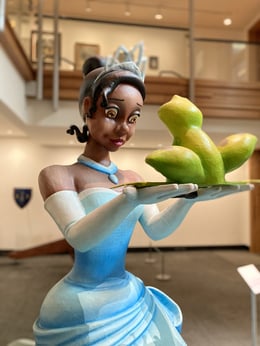
Treasures for Tiana
Disney Imagineers visited HNOC to research a new attraction based on The Princess and the Frog, set to open summer 2024.

Thinking About the Roman Empire in Novus Orleanus
South Louisiana is full of references to the Roman Empire.

Keeping the Beat
Music educators are working to ensure that New Orleans’s marching band tradition continues for generations to come.

Preserving the Pretty
HNOC introduces a guide to preserving and displaying Black Masking Indian suits.

Carnival Couture
Eight Mardi Gras fashion designs inspired by history, pop culture, and even architecture

North Side Skull and Bone Gang: “You Next!”
Bruce Sunpie Barnes, big chief of the North Side Skull and Bone Gang, describes a Mardi Gras Black masking tradition.

The Defiance of New Orleans’s Black Debutante Tradition
The debutante circuit was once the province of whites only, until Black New Orleanians found their own way to hold court.

Architecture & Buildings

Discovering Stained Glass in New Orleans
How a Michigan widower found inspiration in the sacred glasswork of the Crescent City.

The Man Who Lived in a Movie Palace
Rene Brunet Jr. grew up in his father’s cinema, the Imperial. He went on to shape New Orleans’s movie landscape.
Beyond Nottoway
The mansion at Nottoway Plantation burned to the ground, but related sites survive across the South.

The 19th-Century Family Found in an Attic
When one New Orleans couple unsealed the attic of their Algiers house, they discovered a remarkable set of family portraits going back 135 years.

How the Superdome Became a Louisiana Landmark
Nathaniel Curtis Jr. designed the stadium to be a modern counterpart to the great domes of the world.

Tall Orders
Masonic art and influence are all around us, but Freemasonry’s outsized mystique can make it difficult to separate fact from fiction. HNOC explains the real history of a world hidden in plain sight.

Masonic and Odd Fellows Buildings in New Orleans
Society halls and temples have had a lasting impact on the local architectural landscape. Here’s where to find them.
Thinking About the Roman Empire in Novus Orleanus
South Louisiana is full of references to the Roman Empire.

Possessed by the Past at Shadows-on-the-Teche
An antique armoire gives insight into a New Iberia plantation's complicated history and road to preservation.

Publishing
Dig into New Orleans and Gulf South history through our beautiful books, scholarly journal, and award-winning blog and print magazine.


HNOC Quarterly
Our members-only magazine, full of pretty pictures, interesting articles, and inside info

New Orleans Stories,
Delivered to Your Inbox
